
Zelda: Ocarina of Time Remake Deliberately Avoids a Seamless Hyrule, as Director Ng Says: “We Wanted Each New Area to Bring the Original’s Sense of Excitement”
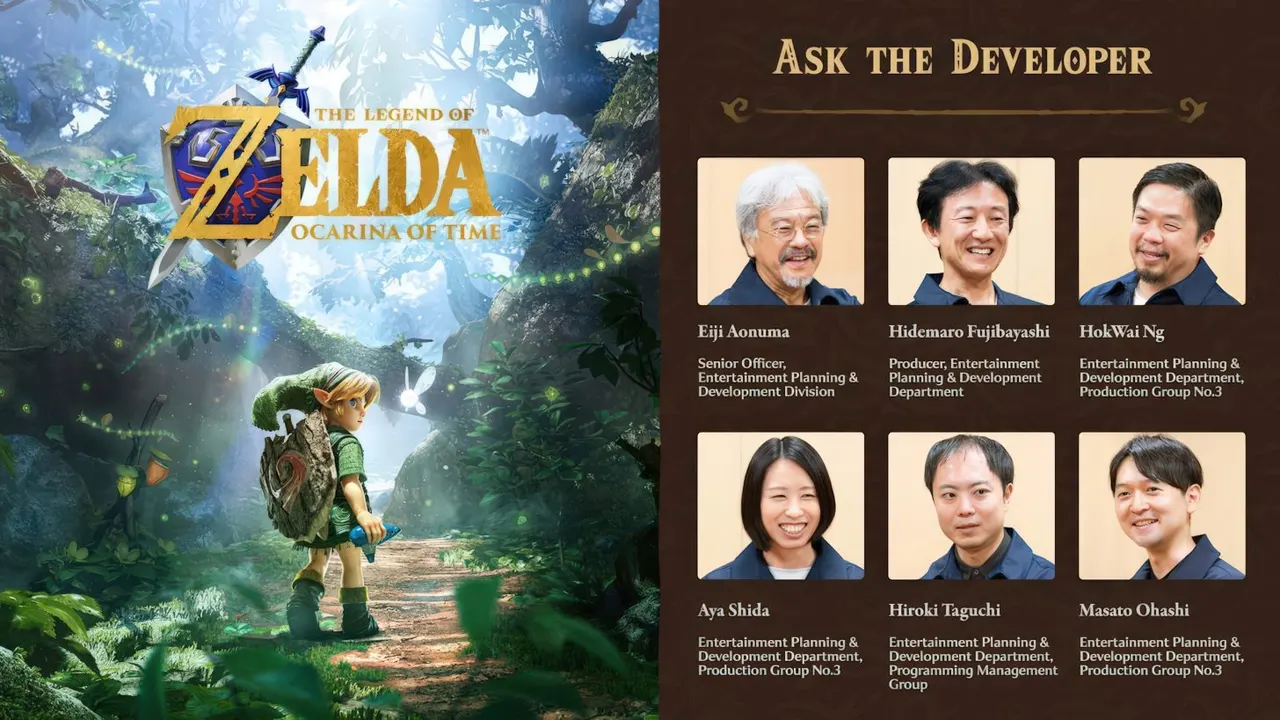
Today, Nintendo has published the first two parts of its vast Ask the Developer interview for The Legend of Zelda: Ocarina of Time remake, ahead of the Switch 2 exclusive's launch on Thursday, November 5. Among the various subjects, the most interesting tidbit concerns a key early design choice the team made: the game's version of Hyrule is deliberately not seamless, a significant departure from Breath of the Wild…
Today, Nintendo has published the first two parts of its vast Ask the Developer interview for The Legend of Zelda: Ocarina of Time remake, ahead of the Switch 2 exclusive's launch on Thursday, November 5. Among the various subjects, the most interesting tidbit concerns a key early design choice the team made: the game's version of Hyrule is deliberately not seamless, a significant departure from Breath of the Wild and Tears of the Kingdom.
Game Director HokWai Ng explains:
We didn't want to change the feel of each location or the way the locations connected with one another, both of which are so characteristic of The Legend of Zelda: Ocarina of Time. So this time, as in the original game, we chose not to make the entire world seamless, instead using separate maps for different areas. We wanted each new area to bring the same sense of excitement that players experienced in the original. We hoped that moving from one map to another would provide a natural point of transition, giving players a chance to reflect on their adventure so far while building anticipation for the next part of their adventure awaiting them in the next area. We also wanted to capture the excitement of thinking, “I'm going to explore this world.”
Ng claimed that the project's guiding principle was “the visuals may change, but the experience does not.” He contrasts Ocarina of Time's more self-contained structure with the vast, seamlessly explorable maps of Breath of the Wild and Tears of the Kingdom.
Elsewhere in the interview, Art Director Aya Shida details how that constraint shaped Hyrule Field in particular: explorable areas received a high level of detail, inaccessible areas were given deliberately less visual information so they read as distant scenery, and landmarks such as the castle and windmill were enlarged to create variation in scale. The goal was for players to understand from the screen alone that something might be hidden behind a breakable object, or that a given spot is a vantage point, without being told.
On the art style, Shida says the team used phrases like a puppet-show feel and the analog feel of practical effects films as early keywords for the intended aesthetic, aiming for a world that felt real without being strictly realistic. Series producer Eiji Aonuma notes the irony that the N64 team was chasing the cutting edge rather than nostalgia.
Parts 3 and 4 of the interview will go live tomorrow; meanwhile, check out our The Legend of Zelda: Ocarina of Time roundup to get up to speed on everything related to the remake.
Follow Wccftech on Google to get more of our news coverage in your feeds.