
One of the GameCube’s Great Cult Classics Gets the Remaster It Deserves
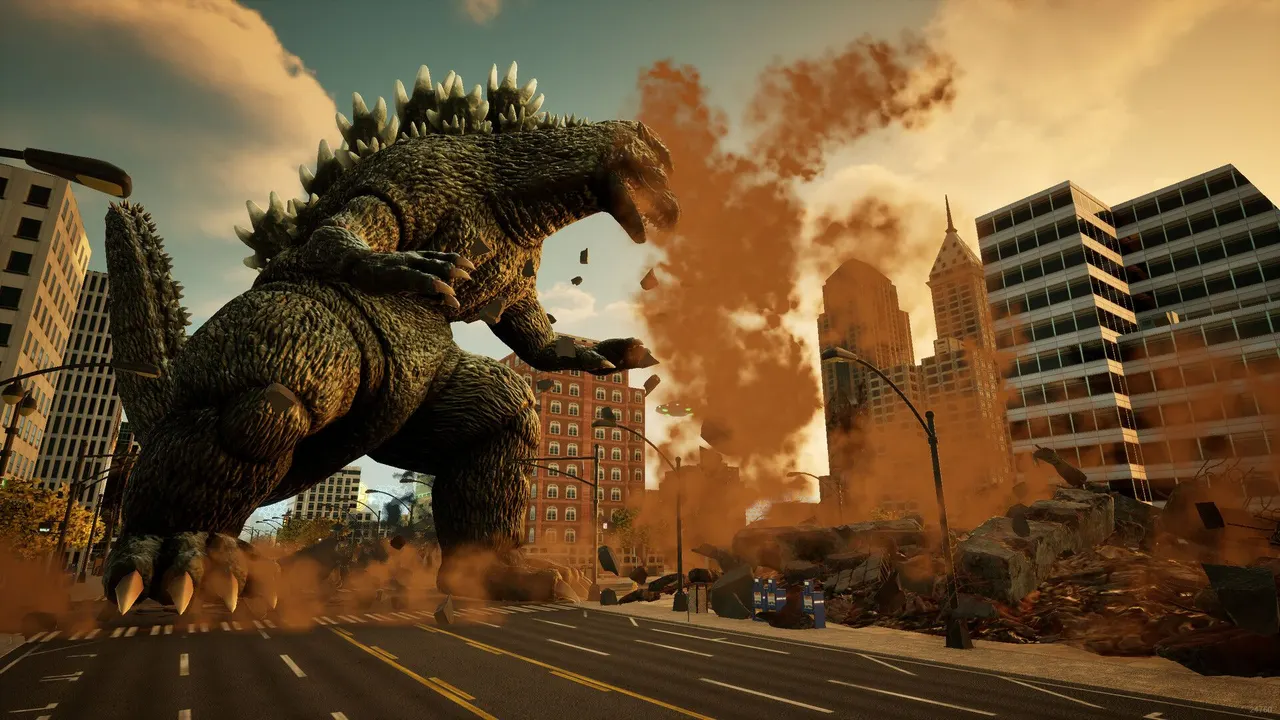
When I was a kid, there were some games I only knew through magazines. I never played them, but they were all over the pages of Electronic Gaming Monthly and Nintendo Power, so I knew everything about them anyway. Godzilla: Destroy All Monsters Melee was firmly a “magazine game” when it was released for the GameCube in 2002. I even had a free poster of it on my wall as a kid, one I kept hung up even after a wave of…
When I was a kid, there were some games I only knew through magazines. I never played them, but they were all over the pages of Electronic Gaming Monthly and Nintendo Power, so I knew everything about them anyway. Godzilla: Destroy All Monsters Melee was firmly a “magazine game” when it was released for the GameCube in 2002. I even had a free poster of it on my wall as a kid, one I kept hung up even after a wave of middling reviews eventually dropped.
Historically, games like that aren’t prime candidates for remasters. They’re left to become rare collectibles found at retro game conventions while canon classics receive countless double dips on modern platforms. So what a delight it is that Godzilla: Destroy All Monsters Melee Remastered now exists, in all of its messy glory. Atari’s surprising revival brings back a quintessential magazine game, rescuing it from its cult-classic destiny with a makeover and online multiplayer in tow.
Does it finally prove 2002’s unimpressed critics wrong? Not exactly. It’s still the same messy and shallow fighting game in some ways. But the purpose of a remaster like this shouldn’t be to engineer a redemption arc; all games, even the ones you never experienced beyond their box art, deserve to be preserved and celebrated.
Developed by Pipeworks in 2002, Godzilla: Destroy All Monsters Melee is a 3D brawler where players duke it out with a roster of rubbery kaiju. It’s a mix between arcade classic Rampage and Super Smash Bros., as you brawl your way through destructible cities using directional attacks. Despite receiving a few strong reviews at release from the likes of Nintendo Power and IGN, it largely earned middling scores from critics who took issue with its lack of depth. History has already repeated itself in 2026: the remaster currently has almost exact same Metacritic score as the original game. (73 for the original, 72 for the remaster.) Having spent hours with the Pipeworks’ faithful remaster, the consistent reaction tracks. Despite looking shinier, the new version wears all of its predecessor’s warts like a badge of honor.
Godzilla: Destroy All Monsters Melee remains a gleefully silly button masher that’s built for parties. Even now, there’s plenty of immediate pick-up-and-play fun that comes with stepping into Godzilla or Megalon’s rubber boots and smashing up Tokyo. Matches feel as big and exaggerated as professional wrestling bouts, as your monster body slams and tail whips buildings. What can feel a little clunky at first soon comes together as you learn how to block, strategically use your atomic breath to create space between you and your opponent, and duck behind buildings for cover. There’s just enough depth to create a casually satisfying fighting game where punching isn’t your only option.
As someone who never got to spend much time with the original as a kid outside of GameStop demo kiosks, I was smitten with the remaster right away, despite recognizing some obvious flaws. Yes, your grab button is finicky, leaving you struggling to pick up a building or scoop up your opponent. The movement can feel laborious as you trek around open city arenas. Characters can feel wildly imbalanced, with flying monsters like King Ghidorah having some clear advantages over grounded foes. There’s also its disappointingly repetitive arcade mode, which doesn’t bother to give each monster their own distinct story as they go to war against an alien invasion. There’s a good reason that games like Godzilla: Destroy All Monsters Melee were largely enjoyed as weekend Blockbuster rentals in their time; you’re sure to hit the bottom of it in just a few hours.
But however short your fling with the remaster may be, it’s still worth spending some time with a blast from the past that’s so committed to celebrating a goofy piece of GameCube history. I quickly came to admire the brawler for its smart way of adapting old-school kaiju fights into a video game. It really gets across the idea that you’re a guy in a monster suit stomping around a fragile miniature city. The remaster keeps that spirit intact by making the shiny new textures look even more like rubber. I appreciate that the clumsiness of the brawling is preserved too, even if it’s not going to earn any favor with critics; the remaster is at its best when it stands by the original game’s vision.
Get Polygon’s Wishlister newsletter
A weekly cheat sheet to what you’ll eventually love to play. No buying, no commitment — just saving for later.
Sign up free
Free. Unsubscribe anytime.
Conversely, it’s at its worst when it tries to work in arbitrary tweaks. In the original game, you unlocked new monsters and stages by meeting various conditions as you played. The remaster trades that tradition for a long-tailed grind where you gain research points by playing. That approach not only pushes you to replay dull modes over and over again, but it also removes the surprising spirit of unlockables from the experience. Gone is the time-honored joy of getting a new character out of nowhere during a session. It’s one bum choice in a game that otherwise reveres GameCube era design choices.
Despite that flaw, I’m glad Godzilla: Destroy All Monsters Melee has gotten its due on modern consoles — and in a way that isn’t desperate to rewrite history. As a collector of PlayStation 2 and GameCube games, I know that there’s a unique joy in cracking open an old game from an age where developers were still figuring out how 3D games should feel. These days, modern games can feel predictable and uniform, as so many developers have refined what a parry should feel like to a scientific degree. Pipeworks was very much experimenting in 2002 as it tried to crack what a Godzilla game that was faithful to Japanese cinema tradition should feel like. The results may have been messy at times, but it’s always a delight to play an old game that’s filled with deliberate design choices. Godzilla: Destroy All Monsters Melee Remastered feels like nothing else in 2026, and that’s what makes it a worthy preservation effort, position in video game canon be damned.