
Voyager 1 probe to hit historic one light-day distance from Earth in 17 days — 49-year-old spacecraft travels 16 billion miles
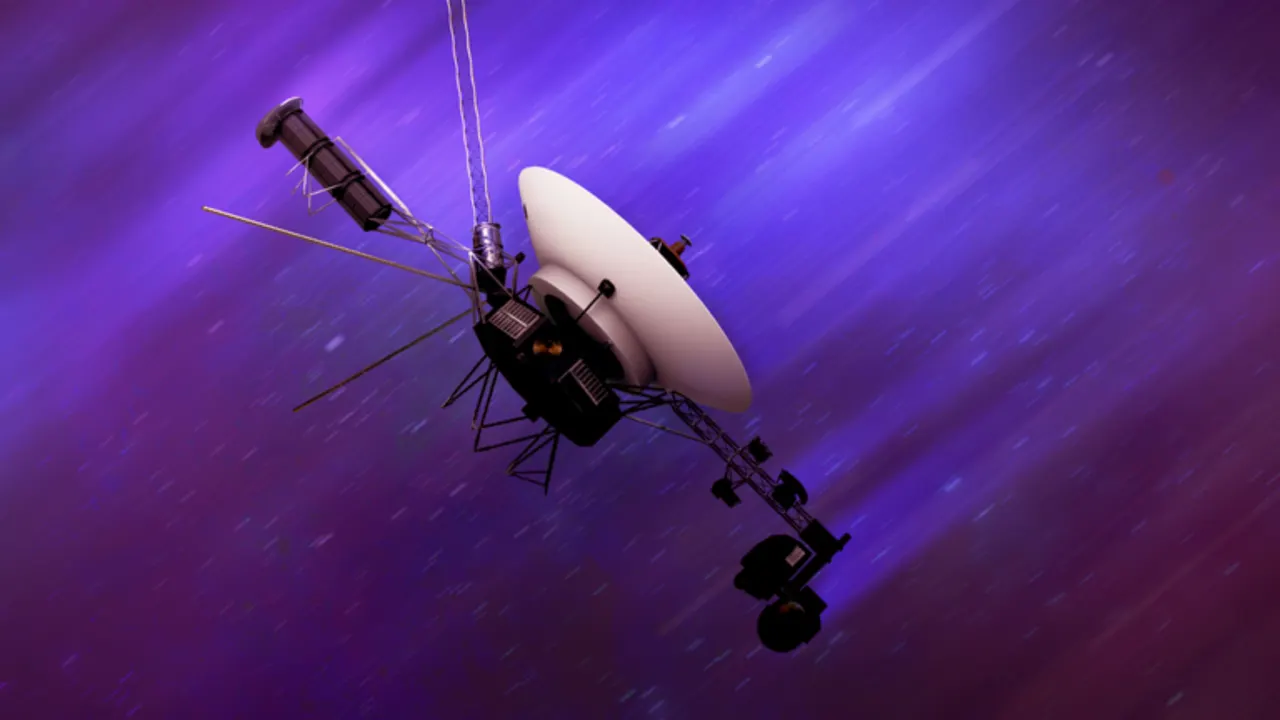
The Voyager 1 spacecraft, which was designed for a five-year mission to observe Jupiter and Saturn, is about to reach a distance of one light-day from Earth after nearly 50 years in flight. According to NASA , the space probe will get to that marker on Nov. 18, 2026, at 5:16:07 a.m. EST, making it the most distant artificial object in history. The agency has now posted a countdown clock to mark the historic moment…
Voyager 1 probe to hit historic one light-day distance from Earth in 17 days — 49-year-old spacecraft travels 16 billion miles and survives nearly ten times the length of its original five-year mission
That's quite an achievement.
The Voyager 1 spacecraft, which was designed for a five-year mission to observe Jupiter and Saturn, is about to reach a distance of one light-day from Earth after nearly 50 years in flight. According to NASA, the space probe will get to that marker on Nov. 18, 2026, at 5:16:07 a.m. EST, making it the most distant artificial object in history. The agency has now posted a countdown clock to mark the historic moment it becomes the first human-made object to reach that distance.
One light-day isn’t a span of time, but the distance it takes for light to travel in 24 hours. Since light travels at around 186,282 miles per second or 300,000 km per second, that’s a distance of about 16 billion miles or 26 billion kilometers. By comparison, the Moon is 238,855 miles (384,400 kilometers) from Earth, while our planet is 93 million miles (149.6 million kilometers) from the Sun.
Voyager 1’s estimated speed in relation to the Sun is 37,844.49 mph, which makes it pretty fast (but still not the fastest human-made object ever built — the Parker Solar Probe’s holds the record at 394,736 mph). Despite that, it will still take the spacecraft 49 years, 2 months, and 13 days to get to one light-day from Earth.
This is actually one of Voyager 1’s achievements, as NASA scientists have extended its lifespan by nearly ten times the length of its original mission timeline. It also hasn’t been easy for the space probe — in 2024, it suffered from a critical memory error, which engineers were able to fix after weeks of diagnosis. The distance has made repairing the spacecraft quite a challenge, as the latency at that time was already more than 22 hours, with round-trip communications taking at least 45 hours. Earlier this year, NASA had to use an emergency instrument shutdown procedure after an unexpected drop in power levels.
Experts estimate that the three radioisotope thermoelectric generators (RTGs) that power the spacecraft have enough juice in them to allow Voyager 1 to continue operating until the 2030s. So, unless it encounters a major issue, we can expect it to continue sending data back to Earth as it continues to travel through interstellar space. As the space probe continues its journey, its heading is set towards a star called AC +79 3888 or Gliese 445. This heavenly body is located within the Ursa Minor constellation, with the ship expected to pass within 1.7 light-years of the star in 17 light-years. But given that Voyager 1 only travels at 0.00564325% of the speed of light, we estimate that it will take the ship more than 300,000 years to reach its next destination.
Follow Tom's Hardware on Google News, or add us as a preferred source, to get our latest news, analysis, & reviews in your feeds.
Get Tom's Hardware's best news and in-depth reviews, straight to your inbox.
Jowi Morales is a tech enthusiast with years of experience working in the industry. He’s been writing with several tech publications since 2021, where he’s been interested in tech hardware and consumer electronics.