
Supreme Court’s trend on church and state is a reminder conservatives have a steady grip on the nation’s laws
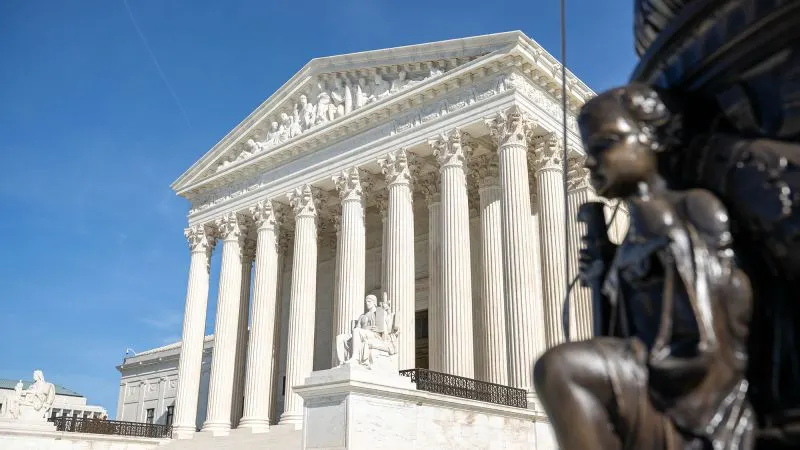
The Supreme Court first agreed to hear the case that launched the justices’ current trajectory protecting the free exercise of religion in January 2016. But after Justice Antonin Scalia suddenly died the next month, creating a possible 4-4 split, the court postponed the hearing for 15 months, past the presidential election.
Only when President Donald Trump’s first appointee, Neil Gorsuch, joined the bench in April 2017 did the justices hear Trinity Lutheran Church v. Comer. That June, the court issued a decision breaking new ground in requiring direct public funding for religious institutions.
That decision continues to reverberate today.
At the time, Chief Justice John Roberts, who benefited from the political turn of events that produced a conservative successor to Scalia, tried to minimize the ruling. He insisted it covered only a Missouri playground-resurfacing program under which the church had sought funds.
Justice Sonia Sotomayor warned her colleagues that the ruling would be the start of something far bigger.
“To hear the Court tell it, this is a simple case about recycling tires to resurface a playground,” she wrote in her dissent, joined by Justice Ruth Bader Ginsburg. “The stakes are higher. This case is about nothing less than the relationship between religious institutions and the civil government – that is, between church and state.”
The prediction was correct. Roberts soon expanded the Trinity Lutheran principle in two cases, from Montana in 2020 and Maine in 2022, to compel more public funding of religious schools.
Appointed at age 50 (the youngest chief justice in two centuries) and today only 71, Roberts has never rushed his priorities. He has often been able to determine when cases are heard and the scope of individual decisions. The pattern diminishing the separation of church and state echoes his moves eliminating race-related remedies and broadening the president’s control over the executive branch.
On Tuesday, while most of America was focused on Election Day, the justices heard a case that will likely produce the fourth ruling in this series and would require Colorado to pay for Catholic preschools even when they exclude children of same-sex parents.
In dispute is a Colorado prerequisite that participants in its universal preschool program agree to a nondiscrimination policy that covers, among other characteristics, sexual orientation and gender identity. Colorado prevailed in lower courts, arguing that the requirement applies neutrally to every preschool seeking state funds—public, private or religious.
The Catholic challengers say that condition infringes on their religious beliefs. They came to the Supreme Court with a stronger hand, based on the cases that Roberts has strategically shepherded over the past decade.
It’s a reminder of how even as this week’s election has upended the political scene in Washington and across the country, Roberts and fellow conservatives still have a steady grip on the nation’s law.
Roberts immediately makes his case
The Constitution’s First Amendment says government “shall make no law respecting an establishment of religion, or prohibiting the free exercise thereof.” The justices have employed various tests through the decades to keep governments from endorsing or favoring certain religions and, alternatively, from interfering with religious beliefs and practices.
The contemporary court has been more open through the years to claims brought by religious conservatives. That shift has been especially seen in disputes over public benefits, as now at the center of the Colorado case, Saint Mary Catholic Parish v. Roy.
Lower court judges sided with Colorado, relying on an older Supreme Court ruling, 1990’s Employment Division v. Smith, written by Scalia, which gave states significant latitude to enforce neutral laws that incidentally infringed religion.
The justices have never reversed that decision, but they have effectively sidelined it through the precedents developed by Roberts.
Right at the start of Tuesday’s two-hour hearing, the chief justice referred to the trio he began with Trinity Lutheran and that extended to Carson v. Maine, which prohibited states from denying tuition assistance to sectarian schools if they offered such educational aid to private nonsectarian schools.
Over the course of those decisions, Roberts had expanded their reach. In Trinity Lutheran, he said it mattered that the church had been excluded based purely on its religious status.
“The express discrimination against religious exercise here is not the denial of a grant, but rather the refusal to allow the Church – solely because it is a church – to compete with secular organizations for a grant,” Roberts wrote, adding in a footnote, “This case involves express discrimination based on religious identity with respect to playground resurfacing. We do not address religious uses of funding or other forms of discrimination.”
In 2022, however, Roberts wrote that “use-based discrimination,” involving public money for religious education, was just as wrong as discrimination based on religious status.
In the previous cases, “we held that the Free Exercise Clause forbids discrimination on the basis of religious status,” Roberts explained. “But those decisions never suggested that use-based discrimination is any less offensive to the Free Exercise Clause.”
As Roberts recounted the three prior cases this week, he acknowledged that they all had involved state policies that clearly excluded religious participation.
“The law in those cases, in each of them, expressly discriminated against religious schools on its face,” he said.
Roberts then observed that Colorado had not expressly separated out religion and asked, “Shouldn’t that make a significant difference given the potential reach of the principle you’re asking for?”
“I don’t think we’re actually asking for a very broad principle,” Nicholas Reaves, the counsel representing the Catholic schools, responded. “When we’re talking about public benefits, it’s a relatively small category of things we’re talking about.”
The chief justice later signaled he might agree as he questioned Colorado’s lawyer and implied the case was not significantly different from the Maine controversy, where the religious challengers prevailed.
“I think the effect of the law in Carson is pretty much the same as the effect of the law here,” he told state deputy Solicitor General Helen Norton. “And we said in Carson that it turned on the substance of free exercise protections. And I wonder in what way you think this is different than Carson.”
Norton, who stressed the neutral nature of the requirements for all Colorado preschools seeking funds, said, “In Carson, a state agency official examined the curriculum of applying schools, and if they found that curriculum to be religious in content, the school was excluded. That is religious discrimination.”
The five other conservatives appeared ready to side with the Catholic challengers: Justices Clarence Thomas, Samuel Alito and the three Trump appointees Gorsuch, Brett Kavanaugh and Amy Coney Barrett.
Gorsuch suggested that even though the state had not specifically targeted religion, its conditions affecting Catholic teachings had produced a similar consequence.
“The Constitution tends to deal in substances, not in shadows and procedures,” Gorsuch said after Reaves asserted that states may be trying to “get around” the court’s recent rulings.
In that vein, Barrett told Norton, “I’m not assuming animus or animus against religion, but if you know that the effect of choosing that requirement will push out those with a contrary belief, how is that different?”
Liberals frustrated again
The three liberal justices, Sotomayor, Elena Kagan and Ketanji Brown Jackson, expressed frustration throughout the arguments.
Sotomayor tried to highlight the potential harm to children of same-sex parents, challenging Reaves: “I’m asking you a direct question. Your Catholic schools will reject a child merely because their parents are homosexual?”
“I would say,” Reaves responded, “if it’s the sincere religious exercise … then I think that would be permitted.”
Kagan contended a decision favoring the Catholic challengers would go far beyond the court’s earlier cases.
Previous decisions, she said, stood for the proposition that “you can’t treat religious institutions differently.”
“That’s not the principle that’s at issue here,” Kagan said. “The principle at issue here is, ‘do you have to treat them better?’”