
From a NY jail, Iranian operative directed terror plot on UK Air Force base used by US, DOJ alleges
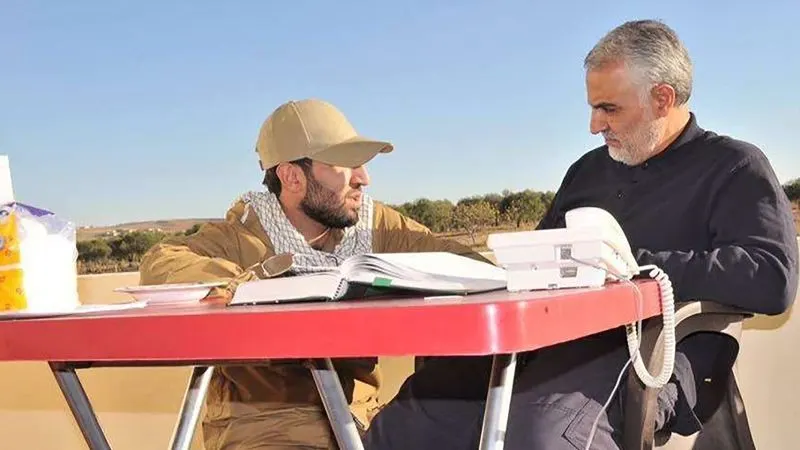
From a jail in New York, a commander of an Iranian terrorist proxy group helped direct a failed plot to attack a key UK Air Force base used by the US to execute the war with Iran, federal prosecutors allege in a new indictment.
The man, Mohammad Dawood Al-Saadi, a duel Iranian and Iraqi citizen, is accused of using coded messages in calls to his family to give instructions to two other people who attempted to help carry out the attack on the base, where US B-1 bombers were stationed.
Al-Saadi, who is associated with Kataib Hezbollah, was already in jail when he began to coordinate the attack, prosecutors said. He was arrested earlier this year on a host of charges around his alleged involvement in terrorist plots in the US and attacks in Europe, and was being held at the Metropolitan Detention Center, a federal jail in Brooklyn, New York.
The new indictment, which was handed up by a grand jury in New York on Tuesday, lays the planned attack at the feet of alleged Iranian military operatives.
Al-Saadi coordinated the plot with Mohsen Mohajeri, an operative of the Islamic Revolutionary Guard Corps, the military in Iran, as well as another Iranian, Mohammad Ali Al-Hassani, according to the indictment. The two men have been charged alongside Al-Saadi.
In September, British police were alerted to three suspicious vehicles driving toward the UK air force base. The police arrested a total of seven men on suspicion of a terrorist plot, but they were later released on stringent conditions after no explosives were found in the vans.
The plan involved using those vans, which were filled with fuel, as vehicle-borne improvised explosive devices, multiple people briefed on the matter told CNN.
Several of those men were rearrested in late October after British authorities said there was a high likelihood Iran’s Islamic Revolutionary Guard was involved in the alleged plot at the air force base.
Court documents explain how the three men allegedly shaped the plot.
Al-Hassani directed the initial steps of the plot, according to court documents. He allegedly ordered surveillance to be conducted at the base and paid unnamed people to procure vans and barrels of fuel. He also kept in contact with the drivers while they approached, prosecutors say, including when they encountered security at the base.
Al-Saadi used nicknames to direct his family members in Iraq to transfer money in support of the plot, prosecutors allege. He also asked his family members to pass along messages about “work” to Mohajeri, which prosecutors said he previously used to describe terrorist attacks.
In one July call highlighted in court documents, Al-Saadi asked his sister whether their “old work” had been cancelled or put on pause. She allegedly responded: “it isn’t cancelled.”
Years prior to his arrest, Al-Saadi allegedly worked closely with Qasem Soleimani, the longtime commander of the Iranian Revolutionary Guard’s Quds force, before the powerful military commander was killed in a targeted US airstrike in 2020.
Prosecutors have alleged that Al-Saadi was like a son to Soleimani, and that he was supposed to be with Soleimani when the commander was killed.
Prosecutors also say Al-Saadi was “close” to the former Supreme Leader of Iran, Ali Khamenei, and warned the dictator three days before the US launched its war “about a potential US strike against Iran.”
Khamenei, who ruled Iran for nearly four decades, was killed in the first wave of US and Israeli strikes in February.
When he was first charged earlier this year, prosecutors alleged Al-Saadi helped film — through FaceTime calls with the assailants — terrorist attacks across Europe following the start of the war and created propaganda videos from the footage of the attacks, including arson against Jewish institutions.
Al-Saadi also tried to hire a person in April to carry out potential assassination plots in the United States, including against a prominent synagogue in Manhattan, according to prosecutors.
Al-Saadi, who was actually communicating with an undercover agent, was detained days later while traveling abroad in Turkey.
Following his arrest, Al-Saadi allegedly told agents he was in charge of media and psychological warfare while also involved in strategy and military intel for Iran and its terror groups, which he viewed as all part of “the resistance.”
US law enforcement extracted photos from Al-Saadi’s devices following his arrest that allegedly depict him in terrorist intelligence bases across the Middle East with military leaders from Iran and its terrorist proxy groups.
Growing concerns over Al-Saadi’s jail house calls
Al-Saadi has pleaded not guilty to the initial charges and has made efforts to start representing himself in the criminal case, according to court records.
While imprisoned at MDC, DOJ placed Al-Saadi in a special housing unit and imposed special administrative measures, or restrictions barring Al-Saadi from communicating with anyone other than immediate family members and his attorneys.
The Justice Department informed the judge Al-Saadi was placed on SAMs “after finding that there is substantial risk that his communications or contacts with persons could result in death or serious bodily injury to persons, or substantial damage to property that would entail the risk of serious bodily injury to persons.”
Prosecutors said in a court filing that on a recorded call Al-Saadi “used coded language, and at times stated that they should be careful about using certain language to avoid the call being cut short.”
On several recorded calls, including into September, Al-Saadi and his family discussed payments and approval to carry out a “job,” according to summaries prosecutors provided to the judge.
Prosecutors highlighted a call from September and warned the judge they were concerned Al-Saadi was attempting to direct others to take action on his behalf.
“For example, on his last call on September 24, 2026, when he directed his family to ‘give him money so we can do it,’” they wrote to the judge.
According to the indictment three days after this call, Al-Saadi’s co-conspirators attempted to carry out the attack on the RAF base.
CNN’s Natasha Bertrand and Zachary Cohen contributed to this report.
Comments
Comments appear after moderation. Persian and English conversations are separate.