
F1 in Mexico City: Yet another Ferrari fiasco, but that’s not all
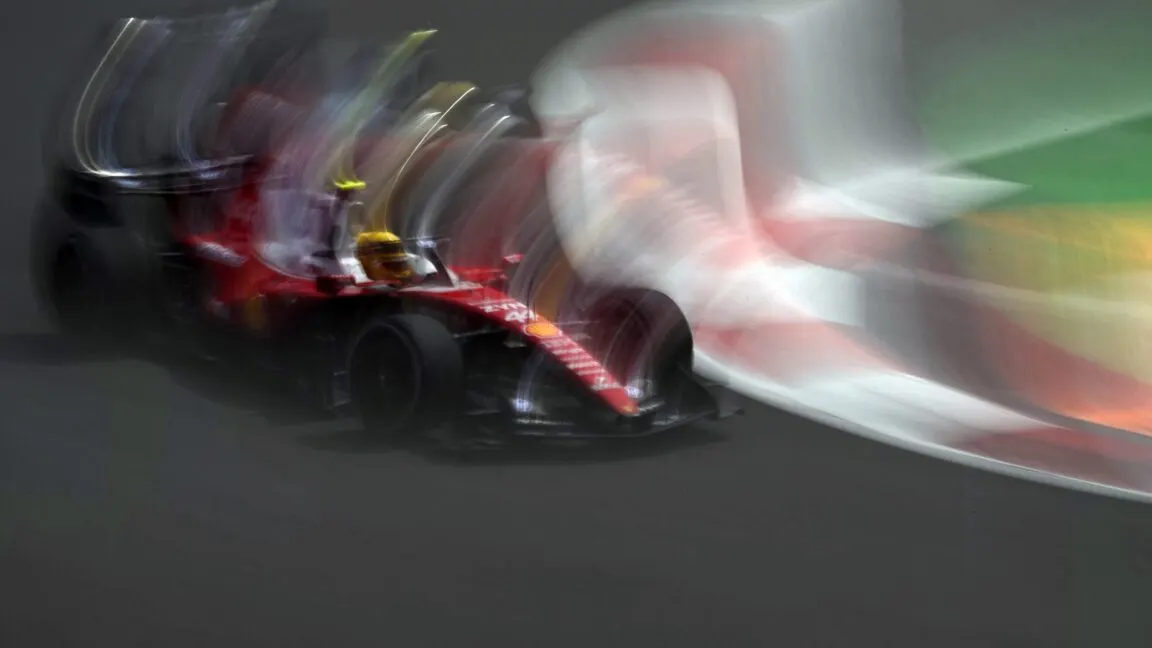
Formula 1 has a new World Drivers' Champion. Just a few months after turning 20, Kimi Antonelli sealed his first title this weekend at Mexico City, becoming the sport’s youngest-ever champion. Elsewhere, there was drama aplenty, perhaps a consequence of the thin air affecting decision-making in some cases. The race was Ferrari’s to win, but yet again, the team handed victory to a rival this season, in this case Red…
Formula 1 has a new World Drivers’ Champion. Just a few months after turning 20, Kimi Antonelli sealed his first title this weekend at Mexico City, becoming the sport’s youngest-ever champion. Elsewhere, there was drama aplenty, perhaps a consequence of the thin air affecting decision-making in some cases. The race was Ferrari’s to win, but yet again, the team handed victory to a rival this season, in this case Red Bull. Further down the grid, we saw a last-minute driver change in the Haas team, synchronized retirements from both Aston Martins, and the wheels literally coming off Cadillac Racing. And there was I, expecting a dull weekend.
It might not be as high as Pikes Peak, but at an elevation of 7,350 feet (2,240 m) above sea level, the Autódromo Hermanos Rodríguez provides a unique challenge on the F1 calendar. Wings that would create huge amounts of downforce at circuits like Monaco just generate Monza-like levels in Mexico, and there’s little slipstream effect when following another car.
Cooling tends to be a problem, too, with insufficient airflow across radiators, and obviously engine power is reduced with less oxygen to burn. The track is very flat, with a rather low-grip surface and mostly medium- and slow-speed corners, including a processional route through a stadium that was built in the 1990s, plus a very long run from the start into turn 1.
Friday’s first practice saw 10 rookie drivers substitute in for series regulars—each team must run a young or test driver in each of their two cars at least twice in a season. Make that six times in the case of Cadillac?
1+30+7+4=40?
Colton Herta’s road to F1 has been a journey.
Credit:
Chris Graythen/Getty Images
Colton Herta’s road to F1 has been a journey.
Credit:
Chris Graythen/Getty Images
The American startup team wants IndyCar star Colton Herta to race in F1, but Herta needs a total of 40 points over three years to get the requisite F1 super license. Sadly, his IndyCar record was too inconsistent—10th place in 2023, 2nd in 2024, but then 7th again in 2025—so he entered F2 this year, both to learn the circuits and to finish well enough in that championship to earn the remaining points.
That hasn’t happened, but you also earn a point for completing 100 km in an FP1 session, and Herta stepped into the Cadillac in Barcelona, Italy, Hungary, and in Texas. His run in Italy was cut short by unreliability, so Cadillac put him in the car again this weekend, hoping it would be the final run.
But it turns out they hadn’t added the numbers properly. Rather than pulling Herta’s IndyCar results from the official scoring, the team apparently relied on IndyCar’s erroneous website. Instead of starting the year with 36 super license points, Herta only had 35, and with four successful FP1 runs under his belt, he still needs one more point if the team wants to replace an underperforming Valteri Bottas next year, something that should happen with another run next time out in Brazil.
Friday’s second practice session also had more action than normal. Max Verstappen and Liam Lawson both sat out FP1 so rookies could drive their cars, which may have contributed to both being too eager to set a fast time in FP2. As Lawson’s Racing Bull got held up by Carlos Sainz’ slow Williams in front, Verstappen wanted past in the Red Bull, but both drivers were intransigent, and neither was prepared to yield. Paint was traded and cars were damaged, and both drivers were handed a one-place grid penalty for failing to behave themselves.
FP2 also probably marked the end of Esteban Ocon’s F1 career, at least for now. The French driver was upset with his team about their choice of tires for his long run, which evidently escalated once he was out of the car. On Saturday, Ocon had been benched and replaced with Ryo Hirakawa, Haas’ reserve driver and two-time World Endurance Champion with Toyota. Haas had already announced that Ocon was not rejoining the team in 2027, opting instead for F1 driver Rafael Camara, who will probably race for the team in Brazil, as Hirakawa will be racing his Toyota that weekend.
At 32, Ryo Hirakawa is quite old to be making his F1 debut.
Rudy Carezzevoli/Getty Images)
At 32, Ryo Hirakawa is quite old to be making his F1 debut.
Rudy Carezzevoli/Getty Images)
Max Verstappen (L) and Liam Lawson (R) getting a bit too robust during Friday practice.
Bradley Collyer/PA Images via Getty Images
Max Verstappen (L) and Liam Lawson (R) getting a bit too robust during Friday practice.
Bradley Collyer/PA Images via Getty Images
At 32, Ryo Hirakawa is quite old to be making his F1 debut.
Rudy Carezzevoli/Getty Images)
Max Verstappen (L) and Liam Lawson (R) getting a bit too robust during Friday practice.
Bradley Collyer/PA Images via Getty Images
Ferrari screwup
For most of this year, Ferrari has had a particular form. The team often tops the practice times on Friday but then fails to follow up on Saturday, often in the final qualifying session. That didn’t happen in Mexico, and Lewis Hamilton was able to claim his first pole position for Ferrari and his 105th in the sport. George Russell’s Mercedes qualified second, followed by Charles Leclerc’s Ferrari. Verstappen should have been fourth, but that Friday clash saw Antonelli moved into that spot. As it happens, the grid demotion put Verstappen on the clean side of the track, which he used to his advantage.
Both Ferraris got off the line well, as did Verstappen and Antonelli. Russell’s hybrid system derated halfway down the straight, ruining his race well before the first corner. With Hamilton in the lead and Leclerc in second place, the plan should have been obvious: settle into a 1-2 and win the race. Unfortunately, the idea of supporting his teammate is utterly alien to Leclerc, who showed us why he has 27 pole positions but only nine wins in eight years. Once more this year, the Ferraris raced each other as if a championship were at stake, and once more they snatched defeat from the jaws of victory.
Going into turn 4, both drivers went off track and rejoined. The race stewards had been extremely clear that leaving the track and gaining a permanent advantage at turns 1 or 4 on the first lap would result in a penalty unless the driver gave the place back. Hamilton did not gain a lasting advantage, but Leclerc did, staying in clean air up front and building enough of a lead that the paltry five-second penalty that was eventually handed down kept him ahead of Hamilton after their stops.
But it didn’t keep him ahead of Verstappen, who stopped at the same time as Leclerc but emerged in the lead, a lead he would keep until the end.
Charles Leclerc (L) and Lewis Hamilton (R) both missed turn 4. Perhaps they shouldn’t have been racing each other so hard.
Credit:
YURI CORTEZ / AFP
Charles Leclerc (L) and Lewis Hamilton (R) both missed turn 4. Perhaps they shouldn’t have been racing each other so hard.
Credit:
YURI CORTEZ / AFP
These cars sure break down a lot
It wasn’t an easy drive to the checkered flag, however. We’re accustomed to Lance Stroll’s Aston Martin breaking down on track and triggering a safety car or a virtual safety car, and this race was no exception. It happened early, on lap 7, while the other Aston Martin, driven by Fernando Alonso, retired to its garage.
Cadillac has also had plenty of reliability problems this year, usually with its front brakes overheating. It was even more serious in Mexico: On lap 44, Bottas’ front left suspension failed as he approached turn 1. The heavy crash forced a red flag to repair the barrier, bringing the race to a halt and necessitating a second standing start.
Verstappen kept the lead, demonstrating the superior power output of the Red Bull power unit, even at altitude, over Ferrari’s. A furious Hamilton passed Leclerc, who compounded his original error by badly locking his front tires, wearing a flat spot down to the cord. The safety car came out again on lap 59, when Arvid Lindblad’s Racing Bull was taken out by McLaren’s Oscar Piastri.
Up front, Hamilton followed Verstappen by a few tenths of a second but without ever having the speed to try an overtake. The Ferrari might not have had the legs to get past the Red Bull, but its tolerance for riding the curbs, plus the small turbo’s punch out of low-speed corners, was sufficient to give it the edge over 2025 champion Lando Norris’ McLaren, which finished in fifth behind Leclerc.
After the race, Ferrari team principal Fred Vasseur said, “I always expect everyone to show respect for the brand, the team, our partners and, above all, the 2,000 people working for us back home. They put an incredible amount of effort into what we do, working day and night at the factory to improve the car and bring upgrades to the track. That’s why missing out on a win in this way is difficult to accept.”
The three best drivers in F1? Max Verstappen (L) and Lewis Hamilton (R) hold Kimi Antonelli (M) aloft on the podium at Mexico City.
Credit:
Clive Rose/Getty Images)
The three best drivers in F1? Max Verstappen (L) and Lewis Hamilton (R) hold Kimi Antonelli (M) aloft on the podium at Mexico City.
Credit:
Clive Rose/Getty Images)
“The core thing to remember, which maybe comes with age, is that every decision you make in the car impacts all the people that work in the background for the whole team,” said a frustrated Hamilton after the race. “A part of our contract is we have to work as a team, which we could have easily done today. So it’s a shame to see us lose as we did. And that will continue unless action is taken, and a real deep, serious conversation is had, so it shouldn’t happen moving forward.”
Hamilton pointed to Leclerc’s “do-or-die, either I win or none of us do” attitude as a problem, ruing the loss of what could have been the team’s best result all year. “It was just unnecessary,” he said. “I think we could have easily had that 1-2, which would have been huge for the team and for everyone back at the factory who’s worked so hard to bring us these upgrades.”
Other teams have laid down clear rules to determine the way teammates race each other—at Mercedes, Toto Wolff began making Hamilton and Nico Rosberg pay for any damage they caused to the cars if they came together on track, and McLaren had its famous Papaya rules. At Ferrari, both drivers are free to race each other, and both are jockeying to be seen as team leader for next year. Now Vasseur has to try to get both Hamilton and Leclerc under control, because if Ferrari keeps giving away race wins like this, his position has to be increasingly untenable.
Jonathan is the Automotive Editor at Ars Technica. He has a BSc and PhD in Pharmacology. In 2014 he decided to indulge his lifelong passion for the car by leaving the National Human Genome Research Institute and launching Ars Technica's automotive coverage. He lives in Washington, DC.