
D&D’s World of Warcraft Designer Hid a Personal Easter Egg in Plain Sight
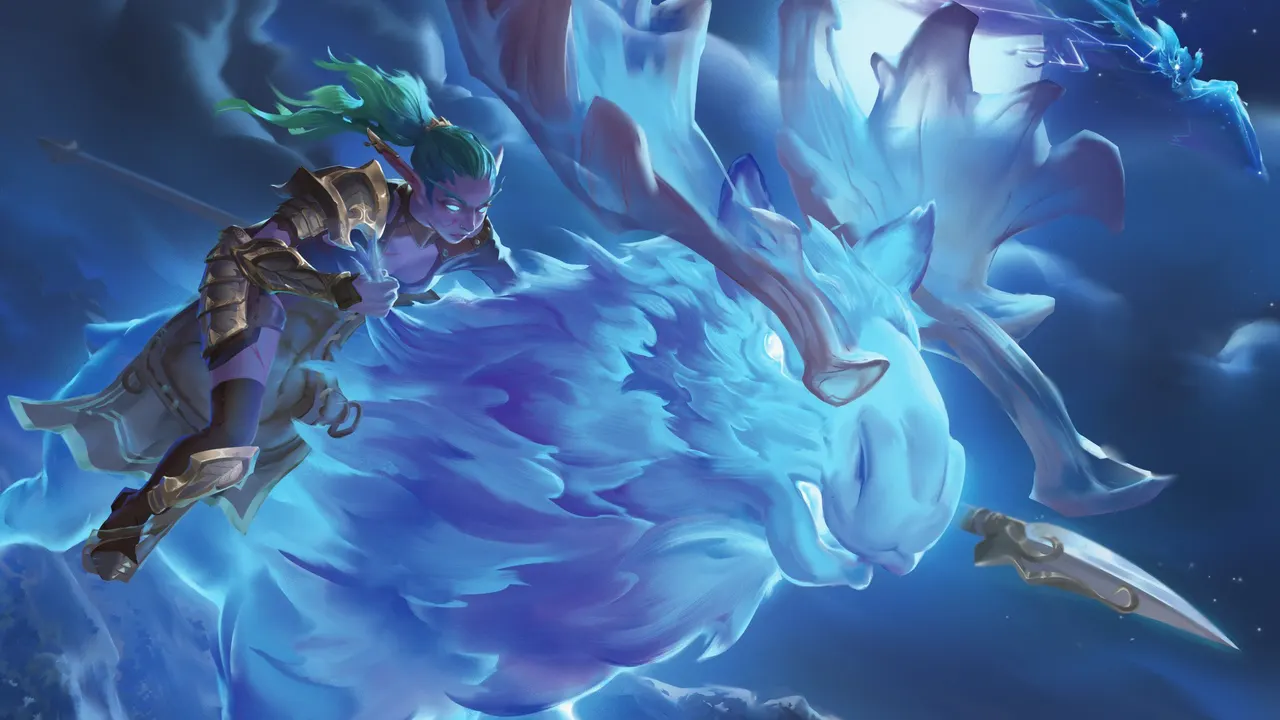
Mounts in World of Warcraft are status symbols, a way of showing off the challenging raids you’ve completed or how far in the PvP ranks you’ve climbed. Dungeons & Dragons: World of Warcraft lead designer James Wyatt couldn’t help showing off himself a bit in the book’s art, where he slipped in an image of his Night Elf warrior riding the Spirit of Eche'ro. Acquiring the spectral moose required spending hours digging…
Mounts in World of Warcraft are status symbols, a way of showing off the challenging raids you’ve completed or how far in the PvP ranks you’ve climbed. Dungeons & Dragons: World of Warcraft lead designer James Wyatt couldn’t help showing off himself a bit in the book’s art, where he slipped in an image of his Night Elf warrior riding the Spirit of Eche'ro. Acquiring the spectral moose required spending hours digging up bone fragments with the Archaeology profession, an activity so tedious it was discontinued after the 2018 expansion Battle for Azeroth.
Fortunately, getting those rare cosmetic items is much easier in the Dungeons & Dragons expansion than in WoW. A character proficient in history can spend an hour or a short rest searching the site of Highmountain Tauren ruins for Archaeology fragments. If they gather six, they can be assembled into a staff that casts the Find Steed spell, summoning the famed moose once ridden by the Tauren hero Huln Highmountain. Wyatt also lets players acquire the Cenarion War Hippogryph, another mount he spent a lot of effort on, by raising their Renown with the Cenarion Circle through protecting the natural balance of Azeroth.
“Cosmetic rewards in WoW are about bragging rights, which is an individual achievement, and D&D is not a game about individual achievements. It's a game about stuff you do as a group together,” Wyatt told Polygon in a virtual interview. “Having mounts appear as Renown rewards and other special things was important for the feel of this cool element of WoW that I want to see in D&D, but the sort of rare achievement aspect of it falls into the category of mechanics that we didn't try to translate.”
Some of the book’s other Easter eggs are nods to WoW’s signature characters, with the Banshee Queen Sylvanas Windrunner appearing on a scale used by a Forsaken alchemist. Others are meant to establish the close ties between WoW and D&D. A gnome is used as the signature Warlock in both D&D: WoW and the Player’s Handbook, and the WoW book’s gnome art depicts them constructing a mechanostrider mount just like the Player’s Handbook version has them building a golem.
Dungeons & Dragons had to get every World of Warcraft detail exactly right
Wyatt and lead art director Sergio Jaramillo spent a lot of time playing WoW so they could provide artists with guidelines to ensure the book’s illustrations were true to the game.
“People have seen these places for thousands of hours on their computers,” Jaramillo said. “They know each peak that Icecrown Citadel is supposed to have and how many banners Ogrimmar has. We have to go through it, compare it, triple-check, and then maybe it’s ready. We sent it to Blizzard, and maybe Blizzard catches something we didn’t. A couple of times there were like, ‘We didn’t know this was there. Nice catch.’”
The team wanted to be precise with its modeling of characters, and even carefully counted the fingers and toes for Azeroth’s various species. They wanted to be sure to replicate unusual features, like trolls’ hunched posture, and the full range of eye and hair colors. They would build characters in the Wowhead Dressing Room, a digital tool that lets you recreate any character build and deck it out in equipment, and then commission artists based on the renders. There were times Blizzard couldn’t help them because the models simply didn’t exist in the game. Visit the Tauren city of Thunder Bluff in WoW and you’ll see plenty of Tauren adults and some babies, but no children. Jaramillo’s team had to come up with the proportions for the Tauren kids they wanted to show riding a kodo, the traditional Tauren mount, in the book’s character origins section.
WoW players can be very passionate about their preferences for playing Horde or Alliance, and Wyatt and Jaramillo wanted to make sure they didn’t appear to favor one faction over another. They made sure to have balanced representation across illustrations showcasing everything from the game’s professions to its boss fights. They even put the Collector’s Edition book in a slipcase so players could choose whether to have the Horde or Alliance logo displayed.
Getting the details of another game right was a challenge, but Wyatt said that in many ways, the project was easier than the work he did designing D&D books based on the Magic: The Gathering worlds of Ravnica, Theros, and Strixhaven.
“Worldbuilding on Magic is like building a movie set,” Wyatt said. “It feels like you’re setting up fronts that are held up by two-by-fours in the back, and if you start pushing too deep, you’re going to realize it’s all going to fall over. D&D worldbuilding has to account for characters who can do anything and go anywhere, and so does WoW. It is a very fleshed out world already. The lore is there.”