
Big Walk AI Controversy Is a GOTY Awards Twist Sparking a Bigger Debate
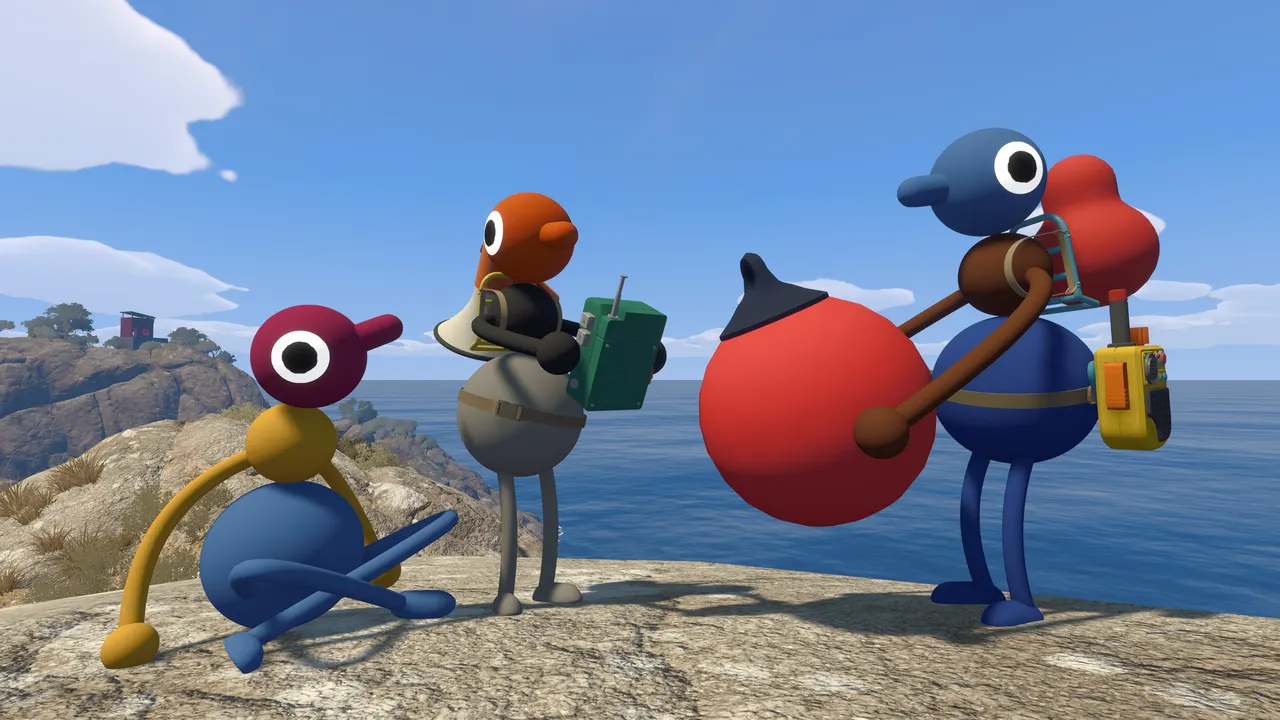
Big Walk , one of the best-reviewed games of 2026 and by all measures a Game of the Year darling, faces a crossroads on the eve of awards season. Following a recent disclosure of AI use from its developer, Big Walk ’s chances at one awards show seem fraught. And its shot at the big one (December’s Game Awards) might be impacted. But it’s not just a chapter in 2026’s awards show saga. In many ways, it’s a boiling…
Big Walk, one of the best-reviewed games of 2026 and by all measures a Game of the Year darling, faces a crossroads on the eve of awards season. Following a recent disclosure of AI use from its developer, Big Walk’s chances at one awards show seem fraught. And its shot at the big one (December’s Game Awards) might be impacted. But it’s not just a chapter in 2026’s awards show saga. In many ways, it’s a boiling over of a debate that’s been bubbling in the games industry for several years now.
On Monday, a group of 19 Independent Game Festival (IGF) jurors, including Immortality director Sam Barlow and Friends at the Table host Austin Walker, shared a statement saying they would not vote for any game that used generative AI tools in any capacity — including for code.
On Bluesky, Barlow said that this discussion among IGF jurors is always lively, but that this year’s “conversation was even more intense.”
Why? It did not take long for at least part of the reason to become clear: Big Walk used generative AI tools in development, developer House House revealed in its voluntary disclosure to the IGF. (In a follow-up statement, Barlow noted that the impetus for the conversation was more broadly about the volume of games that make use of generative AI, and that Big Walk was the "tricky edge case.")
In a statement to Aftermath (also cross-posted on the developer’s website), House House said that “well under 0.1% of Big Walk’s code” had anything to do with generative AI tools, and those tools were used solely to “help work through difficult technical challenges and bugs.” House House also noted that the studio used large language models (LLMs) to generate a baseline, which the team then “modified into game code.” House House’s statement gets into it in full, but the studio pointed to a lighting issue as an example of how LLMs helped with the final phase of Big Walk’s development, amounting to “about 10 lines of code.”
That might seem small in the grand scheme of things, but a hard line is only a hard line if you don’t cross it. And for 19 members of the IGF jury, that’s the line.
The group of jurors cite several reasons for its stance against generative AI, including the technology’s widely documented negative impacts on the economy, the labor market, the environment, and the global informational pipeline. They also say that AI use is “not a foregone conclusion” in the games industry, and, as independent developers, see this as an opportunity to take a stance that many people working at larger companies might not have the leeway to take.
Critically, the inclusion of code as part of the hardline is not something you see every day. Generally, the colloquial argument against generative AI use is reserved for disciplines that are considered more “creative” in nature: art, writing, composition, voice acting, and so forth. You often see people make exceptions for technical work, like programming. This stance from part of the IGF jury marks a clear public expansion of the tent among an influential games industry group, and it’s not lost among a subset of the community that isn’t always public-facing. Responses to Walker’s Bluesky post of the statement are full of programmers thanking the jurors for considering coding an art form.
It has also roiled the gaming community.
The debate isn’t merely broken down among clean lines of “AI good” vs. “AI bad.” Some see it as a betrayal not just that House House used these tools but that it didn’t disclose that use upon release. If the use of an LLM was no big deal, the argument goes, why hide it? And if the company hid this instance, what else was hidden? (Though Steam requires a disclosure for generative AI use, it does not require that disclosure for the use of code or chatbots.)
For others, it’s just about the best case scenario for a worst-case situation. It’s a fairly minimal use, they say, and if strict delineations are made for the public disclosure of 10 lines of AI-generated code, wouldn’t that disqualify many video games? Plus, they say, House House seems reflective and open to change, pointing to the studio’s philanthropic efforts in the past as a sign of good will. (In 2020, following the release of Untitled Goose Game, House House pledged to donate 1% of its profits to organizations that help members of indigenous communities make rent.)
Will this ultimately affect Big Walk’s chances during awards season? Maybe! Though the statement was issued by fewer than 20 IGF jury members, it’s gained traction across both social and traditional media. And now that it’s become a matter of public interest and widespread discussion, there’s always the chance other voters are swayed by their arguments or otherwise hesitate to vote for Big Walk.
How this affects the Game Awards horse race is a cloudier issue. On Monday, Big Walk was all but a lock for a Game of the Year nomination, according to Polygon’s ongoing analysis of the race. But an indie game securing a GOTY nomination is always an uphill race — even without the albatross of controversy.
Yes, the technically indie game Clair Obscur: Expedition 33 smashed records and swept the 2025 Game Awards, but it also broke into the mainstream in an undeniable way. Big Walk, despite its impressive critical reception, has not. To secure the nomination, it needs every vote it can get from nominating jurors who are part of the indie gaming community, which largely rejects generative AI. To wit: Clair Obscur may have run the tale during the 2025 awards circuit, but ultimately had its Game of the Year award from the Indie Game Awards (note: not the same thing as the IGF) stripped over inclusion of AI.
Beyond awards, the entire saga seems an inflection point for an industry that has struggled to grapple with the encroachment of generative AI. Developers of all strata — from the creator of The Last of Us to the studio behind the Wendy’s JRPG — have taken public stances against the technology, refusing to use AI whatsoever in any part of development. They stand in contrast to prominent firms like Embark Studios, which caught heat for using AI in its 2023 shooter The Finals and then immediately used the same tools for its 2025 shooter Arc Raiders, or Epic Games, which is run by a CEO whose stance on LLMs could fairly be summarized as “Claude = Jesus 2.0.”
Get Polygon’s Wishlister newsletter
A weekly cheat sheet to what you’ll eventually love to play. No buying, no commitment — just saving for later.
Sign up free
Free. Unsubscribe anytime.
All the while, AI tools have proven a third rail for large portions of the gaming audience, often prompting public apologies from developers that disclose their use. House House joins that club.
“Big Walk was developed without an internal AI usage policy in place, and we consider that lack of policy a failure,” House House said in its statement. “We will work to have a more comprehensive policy going forwards.”
That’s good on House House. Stating some clearly defined rules for this sort of thing helps settle internal debate, and provides a north star for anyone working at the studio. It could even serve as a model for others in the industry to adopt. But the lack of policy shouldn’t land entirely on the shoulders of a small outfit in Melbourne — or any developer of any size, for that matter. At this point, generative AI tools have been publicly available for nearly half a decade. Until governments start taking the technology seriously and passing real regulations around what counts as acceptable use, this will keep happening.
Comments
Comments appear after moderation. Persian and English conversations are separate.