
After Texas' blue wave, what happens to Elon Musk and SpaceX?
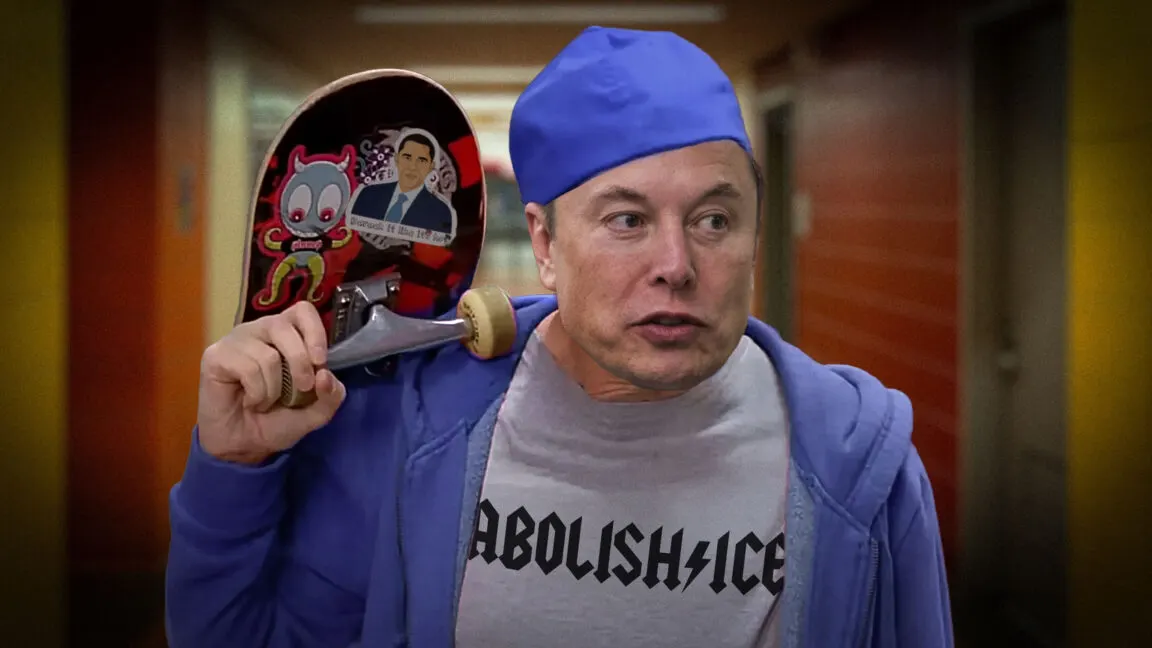
Following his public disputes with California authorities during the COVID-19 pandemic, Elon Musk personally moved to Texas, outside of Austin, in 2020. Over the next six years, he doubled down on the Lone Star State. In 2021, Musk increasingly focused the Starship program in South Texas, urging SpaceX employees to move there and work on the company's future. In March of that year, he began using the name Starbase…
Following his public disputes with California authorities during the COVID-19 pandemic, Elon Musk personally moved to Texas, outside of Austin, in 2020.
Over the next six years, he doubled down on the Lone Star State. In 2021, Musk increasingly focused the Starship program in South Texas, urging SpaceX employees to move there and work on the company’s future. In March of that year, he began using the name Starbase to describe the production and launch facilities near the Rio Grande River.
In 2023, he built a massive factory east of Austin to manufacture customer terminals and other electronics for the Starlink program. In July 2024, he announced that SpaceX would relocate its corporate headquarters from Hawthorne, California, to Starbase, Texas. He cited California’s regulatory and political environment as the motivating factor.
Since then, Musk has continued with major expansions of the Starbase facility. This summer, his company announced that Terafab, “the most epic-chip building effort in the world,” would be built in Grimes County, Texas, and that “a vertically integrated factory with more than 100 million square feet of manufacturing space is planned,” the company said. That’s right, 100 million square feet. This is equivalent to 1,700 American football fields, 15 Pentagons, or three Central Parks.
Everything is bigger in Texas, of course, and for a time, so was the bromance between Musk and Texas politicians. He has repeatedly said he loves Texas’ political climate, its regulatory environment, and the state’s Republican leaders. And in turn, they have loved him back. In July, Texas Gov. Greg Abbott praised Musk before interviewing him as a guest host of The Sean Hannity Show as “the leading visionary of our time. Thomas Edison. Just like that, maybe even bigger.”
And then, the Midterms
During the 2026 midterms, Musk went all in on Republicans, investing nearly half a billion dollars in their election campaigns through his own America PAC and other organizations, according to The New York Times. Of this estimated $474 million, nearly half went to candidates in Texas.
And then, on Tuesday, a historic blue wave washed over the formerly deep-red state. Most of Musk’s political friends in Texas will soon be gone. So what happens next?
We don’t really know. But there are some important things to watch.
First up is Musk’s public comments on the social media site he owns, X. Throughout the evening on Tuesday, as it became clear Republicans were headed for a historic defeat, Musk remained uncharacteristically quiet. His first comment came 12 minutes after midnight in Texas, where the key statewide races had all been called.
“Data centers in space looking pretty appealing right now,” he wrote. A bit later, he tried to react with some sarcastic humor and then largely went back to promoting SpaceX’s AI Grok bot and the Starlink Internet service.
I think we can read a lot into this, drawing on my own understanding of Musk’s motivations and conversations with a couple of people familiar with his thinking.
Politics
Politically, Musk has changed his stripes before. He bundled for President Obama’s campaigns and endorsed Hillary Clinton for president in 2016. Later, of course, he took a hard-right turn, becoming Donald Trump’s most prominent and largest financial backer in the 2024 presidential campaign.
Now there are two avenues open to Musk. He can lean further into Republicans and far-right politics. He still has allies there and could look to become a kingmaker in selecting the party’s 2028 presidential nominee. He could also expand his footprint in other red states (more on this below).
The alternative, which would be consistent with some of his past behavior, is for Musk to moderate politically. But are Democrats interested in de-escalation after such a decisive victory? For several years, Musk has been one of the Democratic Party’s loudest antagonists, after Trump. But he is also doing, at enormous scale, some things Democrats have spent a decade saying America needs: investing in domestic manufacturing and chip fabs and creating thousands of industrial jobs, many of them in the red and purple districts Dems just won. Whether Democrats treat him as someone to be investigated or someone to be bargained with may be the most important open question for him in the next two years.
At the end of the day, what I believe Musk wants most is power. Not so much power in the traditional political sense, but the power to bend the world toward the future he envisions. Right now, that future is heavily steeped in artificial intelligence and requires extraordinary amounts of energy and computing infrastructure to run his AI agents, robots, self-driving vehicles, and more.
One thing to watch is whether Musk develops any kind of relationship with Texas Senator-elect James Talarico, whom he demonized prior to the election and spent so heavily to defeat. Talarico did not specify Musk in his post-election speech but did say, “In this race, we went up against our own Goliaths. The richest man in the world, the most powerful man in the world and the entire Washington, DC establishment.”
Later, he added, “Tonight, we sent a crystal-clear message to the people at the top: We will not be conquered.”
At the same time, Talarico has promised voters that he will serve all of Texas, to love all of his neighbors, and seek to build bridges rather than tear them down. Musk is the richest and most prominent Texan. He also could help ignite the state’s economy in the coming decades. Can he and the state’s newest senator, a gifted speaker and clearly talented politician, be good neighbors?
SpaceX
SpaceX has the bulk of its operations in California, Texas, and Florida. California is deep blue, Texas is blue (for now, at least), and Florida came within 3 points of electing a member of the Democratic Socialists of America as its next senator.
No one I spoke to expects SpaceX to relocate its headquarters from Texas any time soon. The company is too deeply entrenched there, and its near-term ambitions for Starship, Starlink, and orbital data centers would be severely disrupted by a move.
Musk’s first post-election tweet—“Data centers in space looking pretty appealing right now”—indicates where his head is at the moment. He foresees Democrats, such as Texas Governor-elect Gina Hinojosa, who won support from rural Texans who don’t want these massive projects nearby and elsewhere, following through on campaign promises to slow the deployment of terrestrial data centers. And it seems likely that the message some Republican lawmakers will take from this election is that they should limit data center deployment, too.
As Ars reported earlier this year, public opposition to data center construction in Americans’ neighborhoods is one of the main reasons the challenging economics of putting data centers in space might eventually become viable. So we can probably expect Musk to go even harder on his vision to deploy hundreds of thousands of satellites in Earth orbit to provide computing power for AI. Despite Tuesday’s elections, for the next two years, at least, he still has favorable regulators for his launch and satellite businesses.
This may accelerate Musk’s move to Louisiana, which, despite a surprisingly close US Senate election on Tuesday, remains reliably red. The company plans a major expansion there starting as early as next year, and the southern part of the state was already likely to become the long-term focus for launching hundreds or even thousands of Starships a year. It’s not impossible to envision Starbase Louisiana becoming SpaceX’s new headquarters eventually.
The fact that SpaceX became a public company factors into this as well. Musk’s political risk is now priced into the stock, and shares were trading down about 5 percent on Monday, while the broader stock markets were rising.
Investigations
What if Democrats decided “to hell with Musk?” What if they wanted to punish him for all of the harm caused by DOGE, all of the taunts, all of the insults, all of the campaign cash, and all his support for Republicans?
Democrats certainly can conduct investigations and try to understand precisely what role Musk played in shutting off Starlink and Starshield services to Ukraine in its war against Russia. They could investigate his other business deals. They could make his life very uncomfortable. He would very much not like testifying publicly and facing hostile criticism. But Musk has enormous resources to push back and a powerful ally in the White House. Trump could partially shield Musk from some federal enforcement actions and even pardon him if federal criminal offenses were found.
Another priority is the potential merger of SpaceX with Musk’s other large public business, Tesla. Congress could slow a deal by holding hearings and pressuring federal regulators. But if shareholders support it, a merger could still go down during the next two years under the oversight of the Trump White House. Speaking of Tesla, it faces its own host of risks going forward, including federal legislation on autonomous vehicles, oversight hearings on Full Self-Driving and robotaxis, and Musk’s business dealings in China.
What about government contracts and funding from NASA and the US Space Force? Congress definitely controls the power of the purse. However, as Ars reported last week, particularly NASA but also the Space Force need SpaceX more now than SpaceX needs the US government and its funding. Punishing SpaceX by taking away space contracts would severely impair NASA’s International Space Station and Artemis Programs just as the agency is confronting serious competition from China.
Democrats could lean on NASA and the US Space Force to increase their efforts to support competitors to SpaceX in launch, spaceflight, and space-based data services. They could also push for federal procurement reforms.
As for hitting Musk himself, Democrats would probably need a president from their own party. Much of the underlying tide of Tuesday’s elections stemmed from Americans’ growing frustration with the massive wealth and power being accrued by billionaires, of which Musk is the most notable example. For the time being, Trump will be able to shield his tech-bro friends and donors. But with a Democrat in office, the party could create and pass legislation that changes how ultra-wealthy individuals are taxed.
Eric Berger is the senior space editor at Ars Technica, covering everything from astronomy to private space to NASA policy, and author of two books: Liftoff, about the rise of SpaceX; and Reentry, on the development of the Falcon 9 rocket and Dragon. A certified meteorologist, Eric lives in Houston.