
This is when external DACs for your phone are worth buying
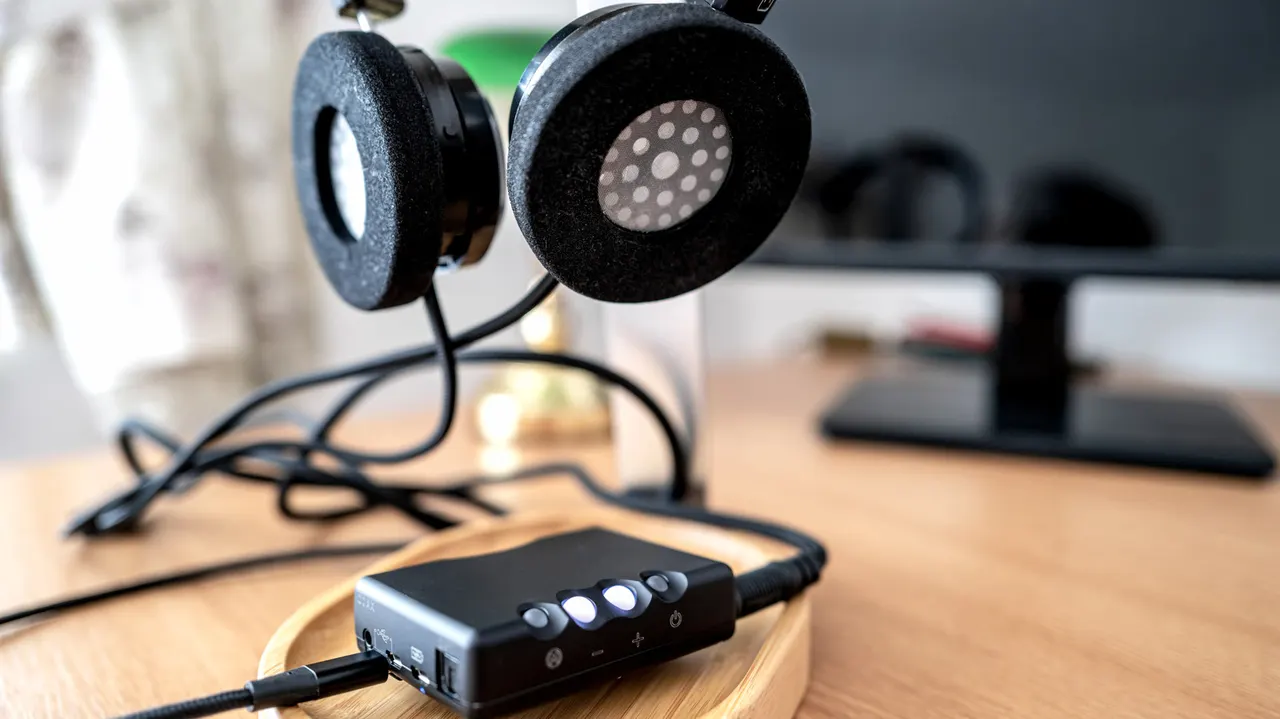
External DACs aren't necessarily for everyone, but they can be an essential smartphone accessory for those interested in high-quality audio.
This is when external DACs for your phone are worth buying
An external DAC is a must-have if you want the best possible audio from your smartphone.
We may receive a commission on purchases made from links.
Audio streaming services have started meeting the needs of audiophiles everywhere by adding advanced features like Dolby Atmos and lossless audio. In 2025, Spotify joined Apple Music, Tidal, Qobuz and Amazon Music in offering Hi-Res audio streaming, ensuring CD-quality audio or better from your phone. However, that's only half the equation, and the onus is on listeners to ensure their audio setups are up to snuff.
If you want lossless audio, the first thing any audiophile will tell you is to ditch the earbuds. Wireless headphones use Bluetooth to connect to your phone, which operates on the busy 2.4GHz frequency band that Wi-Fi routers and other smart devices use. Bluetooth uses compression algorithms to reduce its bandwidth needs, so you usually won't get lossless audio unless your source and headphones support aptX Lossless. So, if you're interested in lossless and hi-res audio, a pair of wired headphones is your best bet.
However, switching to wired headphones is only part of the solution. Almost all smartphone manufacturers have ditched the 3.5mm headphone jack, requiring listeners to have an external digital-to-analog converter (DAC) to connect wired headphones. Let's take a deeper look at how DACs transform digital signals into analog ones your headphones can reproduce and what you need to know when buying one.
Inside your digital-to-analog converter
At its most basic, a DAC translates a digital audio signal, which is stored as 1s and 0s, into an approximation of its original analog signal. The length of these binary codes is its bit depth. Sample rates, meanwhile, indicate how often these measurements are taken in a set interval. High-resolution audio, for instance, typically takes a 24-bit sample 192,000 times per second. This means it has a bit depth of 24 and a 192kHz sample rate, often written as 24-bit/192kHz.
Typically, the higher the bit depth and sample rate, the more precisely the signal corresponds to the sound wave's amplitude. Once unscrambled into an analog signal, DACs send the audio to an amplifier, which then feeds your speakers or headphones. Most, if not all, modern external DACs for phones will have a built-in amplifier.
While all DACs do the same basic job, they're not necessarily created equal. Some DACs may not support all hi-res sample rates or formats, for example. Similarly, others may struggle to convert a bitstream with consistent timing, likely due to poor clock circuitry. These clocking errors can cause jitter during playback, which some maintain affects playback performance. This is why you may not want to buy just any DAC and go for a high-quality unit instead. For devices with built-in DACs, an external unit can also improve sound quality by improving the fidelity of the conversion.
How to choose your DAC
If you're using a smartphone, you'll most likely need an external DAC for hi-res or lossless audio. Some phones, like the iPhone, support lossless with the AirPods Max 1 or 2 over USB-C, but Apple's support page notes that you'll need an external DAC for hi-res audio beyond 48 kHz. It's worth noting that the 48 kHz ceiling is well below Apple Music's Hi-Res Lossless maximum of 24 bits/192 kHz.
The first consideration when choosing a DAC is its compatibility with your phone's port. Most of the time, this means choosing a DAC that connects via USB-C or Lightning. If you already have wired headphones, you'll also want a DAC with the right audio jack, usually 3.5mm or 4.4 mm balanced, or a suitable adapter if you have a pair with a 6.3mm plug. Also confirm the DAC supports the bitrates and file formats you want to listen to, whether it's FLAC, WAV, or DSD. If you want to stick with wireless headphones, you can get an adapter that maximizes your Bluetooth connection via better codecs. One example is the Sennheiser BTD 700, which supports 24-bit/96kHz audio over aptX Adaptive and aptX Lossless.
Of course, price is likely a priority. Luckily, quality external DACs can be relatively cheap, with the 32-bit/384 kHz-capable FiiO KA11 DAC available for as low as $32. Premium DACs, like Chord Electronics' Mojo 2, meanwhile, can cost nearly $600. To learn more about which DACs might fit your needs, consult Engadget's in-depth overview of the best DACs on the market.