
The danger of charging your phone under your pillow isn't radiation
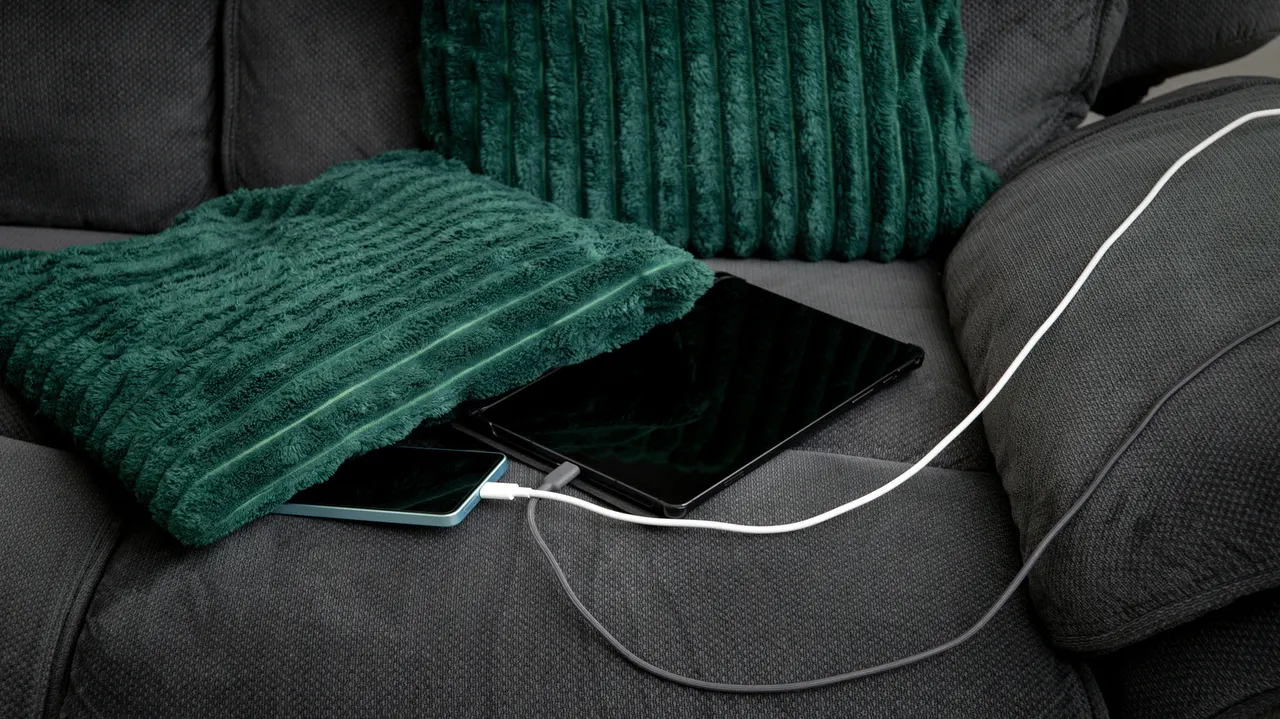
The old fear about cell phone radiation causing cancer is an overblown concern, but there are other dangers when you tuck a charging phone under your pillow.
The danger of charging your phone under your pillow isn't radiation
You won’t get cancer, but you might catch fire if you keep doing this.
You've probably heard this warning before: Never sleep with your phone under the pillow; your brain will get all the radiation, and you'll develop cancer. Well, a World Health Organization (WHO)-commissioned study from two years ago says that's quite unlikely, so you don't have to worry about cancer if you end up tucking the phone under your head for the night. You should, however, be concerned about your phone overheating and the risks of it causing a fire.
It's quite understandable that, after finally finishing scrolling social media or whatever it is you do before bed, you'd want to tuck that phone away wherever it's closest to you. That's either right next to your head or under your pillow, if you want to ensure you won't slap it into the next dimension in your sleep. The problem is that, if your phone is also charging, its temperature will rise. With it tucked under your pillow, the growing heat can't dissipate into the open air like it normally would. Over time, this can damage your device, shorten the battery's lifespan and, in some rare but documented cases, lead to burns or fires. Understanding why this happens and what to do instead can help protect both your phone and your home without giving up the convenience of keeping your device nearby.
Overheating, not radiation, is the real risk
Charging your phone is very much a thermal process. Lithium-ion batteries, which nearly all smartphones use nowadays, release heat as they draw power. That heat needs to dissipate safely, and it needs a hard, open surface to do this without issue. When you keep your phone in bed with you, under a pillow, a blanket, or anywhere airflow is restricted, that doesn't happen.
If you do it a handful of times, this won't be an issue, but if it happens repeatedly, there can be consequences you won't like. Your device's battery will degrade faster, as prolonged heat exposure accelerates the breakdown of battery cells. Diminishing battery performance on smartphones is already a touchy subject for most users, so speed-running that process doesn't sound like a good idea.
That excess heat won't just damage your phone's battery, but it can also warp components or trigger safety shutdowns. Repeated overheating increases the odds of permanent hardware problems. In rare cases, trapped heat combined with a damaged battery can lead to what's called thermal runaway, where your phone starts generating heat faster than it can get rid of it. At this point, the phone is at high risk of catching fire. If you're also using an uncertified charger that lacks proper heat regulation and surge protection, overheating is even more likely to happen. The solution to this problem is pretty straightforward, and it's to simply place your phone on a hard, flat and well-ventilated surface when you're charging it.
What about radiation?
We've all heard warnings about phones and radiation risk. Some voices say not to sleep with your phone under the pillow; others say it shouldn't even be on the nightstand near your head, while some even insist that the phone shouldn't be in the room with you at all.
The reality is that cell phones emit non-ionizing radiofrequency radiation, which is a low-energy form of radiation that doesn't carry enough strength to damage DNA the way X-rays or gamma rays can. Over the years, research has been done extensively on this topic. A 2024 systematic review and meta-analysis published in the Environment International Journal found "moderate-certainty evidence that it likely does not increase the risk of glioma, meningioma, acoustic neuroma, pituitary tumors, and salivary gland tumours in adults, or of paediatric brain tumors." Basically, chances are slim you'll get any type of head tumor from your phone.
This doesn't mean that reducing exposure isn't worth practicing. Fire and overheating, however, are the more likely risks that deserve your attention first.
Develop safer charging habits
If you want to mitigate the risk of your phone's battery swelling overnight, you need to be more careful with your phone and how you're charging it. First of all, you should have a bedside table or desk nearby where you can charge your phone on a hard, open surface. Even the floor beside your bed is a better idea if you have hard floors.
You could also get a wireless charging pad to place on your nightstand, so your device always has a designated nap spot. Make sure you're only using certified chargers while you're at it. You might also want to switch to a classic alarm clock for morning wake-ups so you're no longer tempted to bring your phone as close to your ear as possible.
These changes take very little effort on your part but will reduce the odds of battery damage, device failure, or, even worse, fire. You'll still get to use your phone before bed and charge it overnight, but you'll do it all safely.