
The blue wave just blew up the 2028 presidential race
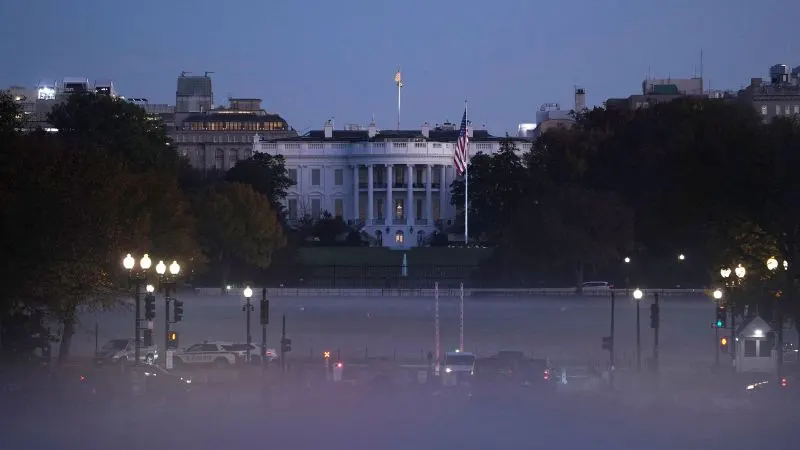
The 2026 midterms ended in a massive blue wave that will change the balance of power in Washington and also, maybe, blow up the presidential map for 2028.
Democrats’ success in many red states could open new paths to 270 electoral votes and rewrite the playbook for a winning presidential campaign.
Republicans, smarting from voters’ rebuke of President Donald Trump, will be wondering whether to it’s better to rebuild his MAGA coalition or go in a new direction.
No one from either party has officially launched a presidential campaign, although that could come much sooner than you think.
Here’s a look at how the midterms played out for potential candidates:
Josh Shapiro. No one leaves the midterms happier than the Pennsylvania governor. He won reelection by more than 20 percentage points. Democrats in his state flipped four House seats. He’s got a winning record in a key swing state. He’s brushed off questions about running for president, but he won’t be able to do that any longer.
Gavin Newsom. California and Newsom met the midterm moment by redrawing the state’s congressional districts in response to Texas’ redistricting last year. That move, which required a statewide ballot initiative, will help Democrats build their House majority, and Newsom can essentially claim credit for five House seats gained in the midterms. Newsom will have a lot to be proud of as he eyes his looming exit from the governor’s mansion. And he’s not done as governor. Newsom this week announced he would commute the death sentences of all 548 people on California’s death row, a pointed contrast with the views of Trump.
Raphael Warnock. Georgia’s other Democratic senator could also be in the conversation. If Democrats’ new path to majorities is with Black voters in the South, it means the reverend can make a strong argument. Warnock worked hard all over the campaign trail trying to expand the map for Democrats, an investment that paid off. Warnock told CNN’s Jake Tapper before the midterms he would be running for “high office” in 2028. He did not clarify that meant running for reelection as senator or for president.
Pete Buttigieg. If Democrats need someone who can speak both to the old party base and the new middle America battleground, the former South Bend mayor and secretary of transportation can make a good case. It’s something he made clear as a dogged campaigner during the midterms, when he traveled to 38 states, working on behalf of candidates and building up good will.
JB Pritzker. The Illinois governor won reelection in a walk. But more importantly, he spread his wealth around with strategic investments in campaigns. He funneled money into the Texas race for governor, for instance, when Democrat Gina Hinojosa badly needed it. That was a smart bet.
Andy Beshear. He’s the Democratic governor of a red state and he chaired the Democratic Governors Association, which helped elect a slew of new Democrats in Ohio, Iowa, Kansas and Texas. On the other hand, some Texas Democratic members of Congress and national group leaders accused him of not doing enough to help Hinojosa, who was badly outspent by Republican Gov. Greg Abbott. Kentucky was the site of one key House flip, but Republicans held the state’s Senate seat. If the ultimate message is that moderate Democrats can win, though, that is a boon to Beshear. “You can’t see everything as red versus blue, us versus them,” he told CNN’s Anderson Cooper the day after the election.
Kamala Harris. The former vice president might seem like a figure from an earlier, more painful period for Democrats. She lost the 2024 election and would have to figure out how to excite primary voters. But she made some smart choices in the midterms, like traveling to Mississippi to rally for Scott Colom when he seemed like a long shot. She also campaigned in Michigan for Abdul El-Sayed, who fared poorly with Black voters in the state’s Democratic primary before they came home in the general election.
Alexandria Ocasio-Cortez. The New York congresswoman has a rare kind of celebrity among Democrats. She is a major pull for progressives and rallied with candidates like El-Sayed. At the same time, she has moderated some of her positions as a democratic socialist, an important development since what propelled Democrats to majorities was wins by moderates in red states.
Jon Ossoff. Georgia’s newly reelected Democratic senator has sworn repeatedly that he is not interested in running for president. But as the face of Democrats’ sweep through the South, he won’t be able to escape speculation that he, like Barack Obama, could change his mind and run for the White House. The election of Keisha Lance Bottoms — who will be the nation’s first Black woman governor — means any potential Senate vacancy in Georgia would be filled by a Democrat.
Rahm Emanuel. The former ambassador, Chicago mayor and White House chief of staff to Barack Obama has been omnipresent on TV, honing his argument for a moderate, education-focused, results-oriented platform. He might not have the youth or campaign-trail pull of some other potential candidates, but he is putting in the hours.
JD Vance. The vice president wrote a long social media post after Republicans’ midterm shellacking in which he blamed the Iran war, above all else, for his party’s historically bad night. That means, by his own logic, that Vance will have to figure out how to end the war without alienating Trump in order to rebuild the MAGA coalition of what he referred to as “Trump/Vance” voters. He’ll have his work cut out for him even as he remains Trump’s political heir apparent.
Ron DeSantis. Florida was the Republican’s’ bank that was not breached by the wave. DeSantis told Tapper the GOP losses could have been an “extinction level event” for Republicans had it not been for Florida. Margins were tight, but the state elected a Republican senator and governor, and its redistricting efforts, while not successful, did not actively backfire. DeSantis, like Newsom, will be out of a job in January. He’s not out of ambition.
Marco Rubio. The secretary of state did appear on the campaign trail at rallies with Trump, but not much. It would be a little awkward for the country’s top diplomat to be putting on partisan hats. This also means that while Rubio maintains a level of popularity in the GOP, he won’t be as tarnished by the midterm losses as, say, Vance. As Trump said during an appearance in Kansas, Rubio is “getting too popular.” And then joked about firing him. Rubio would need to leave the administration in order to run and likely also break with Vance.
Ted Cruz. If Rubio and DeSantis are associated with the state that withstood the wave, Cruz is a figure of the state where the wave crashed. He was all over the campaign trail, but many of the candidates he helped won’t be in office to return the favor during a potential presidential campaign.
Pete Hegseth. There’s conjecture the defense secretary could face an impeachment push in the coming weeks and that some Republicans could support it. If the unpopular Iran war he is associated with is a main reason Republicans lost the House and Senate, it seems far-fetched that Hegseth would have much of a political future. Americans indicated at the polls that they want moderates who talk about working together. Hegseth would need to completely overhaul his image to fit that bill.
Sarah Huckabee Sanders. The Arkansas governor, and former White House press secretary, was easily reelected Tuesday. She could make the argument for a run, especially since her father, who also was governor of Arkansas and is now Trump’s ambassador to Israel, did well in Iowa caucuses during his presidential campaigns.
Tucker Carlson. If Vance is now openly talking about the political liability the war has become for Trump and Republicans, Carlson was talking about it from the start. He has teased the idea of a third-party presidential campaign, which seems far-fetched, but could certainly press on the growing fissures in the MAGA coalition.