
Qalo SL-1 vs. Garmin Cirqa: How these minimalist wearables compare
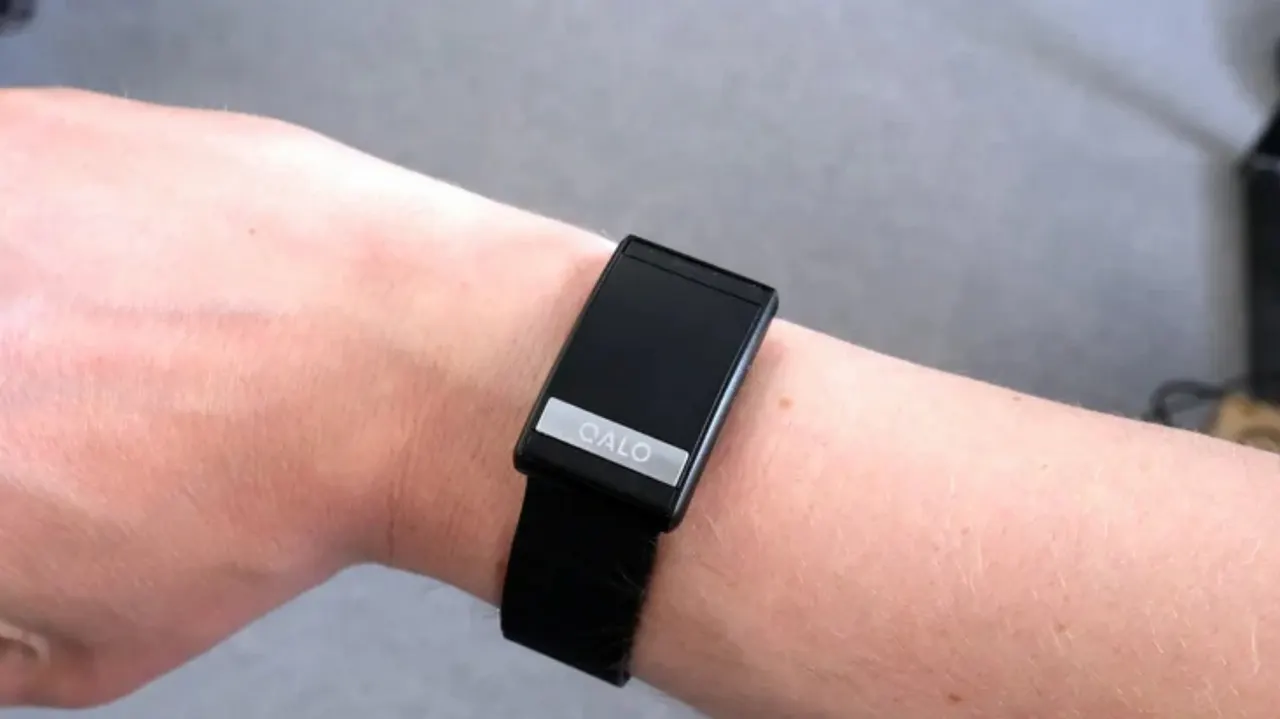
The Qalo SL-1 and Garmin Cirqa were released in 2026, and both cost about $200. A comparison of these screenless wearables reveals some key differences.
Qalo SL-1 vs. Garmin Cirqa: How these minimalist wearables compare
Both screenless bands cost about $200 and work without a subscription, but their specs are pretty different.
Garmin and Qalo both launched screenless fitness bands just 10 weeks apart this year — and also priced them four cents apart at about $200 each. Garmin announced the Cirqa on July 21, and Qalo followed on September 29 with the SL-1. Neither of the bands has a display or requires a paid membership to work, separating them from Whoop, whose bands come with a membership starting at $199 per year.
Looking at their respective spec sheets, Qalo claims the longer battery life while Garmin lists the deeper water rating, more activity types and more training metrics. The Garmin wearable also has an optional paid software tier that Qalo doesn't. We've tested both in depth: our Garmin Cirqa review scored it 7.4 out of 10, while our Qalo SL-1 review gave it 6.8.
Price and subscriptions
Qalo sells the SL-1 for $199.95 with a black silicone strap and a charging dock. Extra straps will set you back $34.95 apiece. No subscription is required to use the band, and the companion app is free.
Garmin's press release says the $199.99 Cirqa tracks its features without the need for a subscription. That said, there is an optional tier called Connect+, which costs $6.99 per month or $69.99 per year. Cirqa's manual lists things like AI-generated insights, nutrition logging, Live Activity Stats, training guidance and a performance dashboard among the features that need the subscription. It also says that guided workouts require a subscription, and that some activities may too. Both bands are eligible for HSA and FSA spending.
Size, durability and battery life
Qalo lists the SL-1 at 18 grams and 10.5mm thick but doesn't say whether that weight includes the strap. Garmin's Cirqa is 14.8 grams without the strap and 20.7 total grams with the smaller wristband.
The SL-1 is worn on the wrist, about an inch above the wrist bone, on a silicone strap with a woven one sold separately. Meanwhile, the Cirqa sports a fabric hook-and-loop band that comes in two wrist sizes and can also be worn on the upper arm with a long arm band. Garmin offers four colors, and the Cirqa has one side button, a multicolor status LED and vibration alerts for alarms and a Find My Band feature. Qalo's support pages describe only a charging status light.
Garmin has rated the Cirqa at 5 ATM, which its manual describes as being capable of withstanding pressure equivalent to a depth of 50 meters and includes a Swim activity. In contrast, Qalo's product page says the SL-1 is water-resistant to 10 meters and warns against scuba diving and deep-water pressure. Its support site gives it a IP68 rating. In terms of temperature, the Cirqa's stated operating range is -4 to 140 degrees Fahrenheit, while Qalo lists 14 to 113 degrees Fahrenheit.
Qalo advertises 12 or more days of battery life for the SL-1 and Garmin up to 10 for the Cirqa. In our SL-1 review, the battery still had over half its juice left after a whole week. The Cirqa, meanwhile, charges in up to 90 minutes over a proprietary Garmin cable, while the SL-1 uses a magnetic dock with a USB-C cable. Interestingly, Qalo's docs disagree on how long it takes the SL-1 to charge: the product page says 60 to 120 minutes while the support site says two to three hours.
Sensors, tracking and accuracy
Both bands come with an optical heart rate sensor and can measure blood oxygen, skin temperature, heart rate variability, stress and sleep stages, and both offer menstrual cycle tracking. Neither has built-in GPS, but the Cirqa can use a paired phone's GPS. Qalo rolls sleep, HRV, movement and stress into a daily "Q Score" from 1 to 100 while Garmin spreads its analyses across Body Battery, Training Readiness, training status, VO2 max and HRV status. The Cirqa lists more than 80 activity types against the SL-1's 54, and the Cirqa can broadcast heart rate to other devices. The SL-1 shares one profile with Qalo's smart rings, which the company also sells without a subscription.
Qalo's product page says the SL-1's 54 activity modes include automatic activity detection, but our review found that the band didn't pick up workouts by itself, not even walks. Meanwhile, the Cirqa's automatic detection worked well enough in our testing that manual recording was rarely needed. Qalo also says its movement tracking is up to 12.5 percent more accurate than "popular alternatives." While our SL-1 review didn't test accuracy, our Cirqa review did count Garmin's reliable accuracy among the band's strengths.
Beyond the specs, we found the Cirqa to be perfectly functional in our testing. That said, the single button was the main irritation, since dismissing the alarm with a mistimed press starts a workout instead. We also found the Garmin Connect app to be pretty heavy on data and light on interpretation, and it was hard to see why the Cirqa costs more than Garmin's own cheaper trackers. The SL-1 fared a little worse. The battery was excellent, still showing 59 percent after a full week, and there's no fee to worry about, but the magnetic clasp on the silicone strap can come loose if a sleeve catches it at the wrong angle, and the app does little beyond aggregating the data it collects.
With both bands at the same price, we'd lean towards the Cirqa, which gets the basics right. The SL-1 would make more sense as a first screenless tracker if it were cheaper.