
Phantom Blade Zero Doesn’t Have an Achievement for Beating Its Hardest Mode; A Growing Trend in the Games Industry Is to Blame
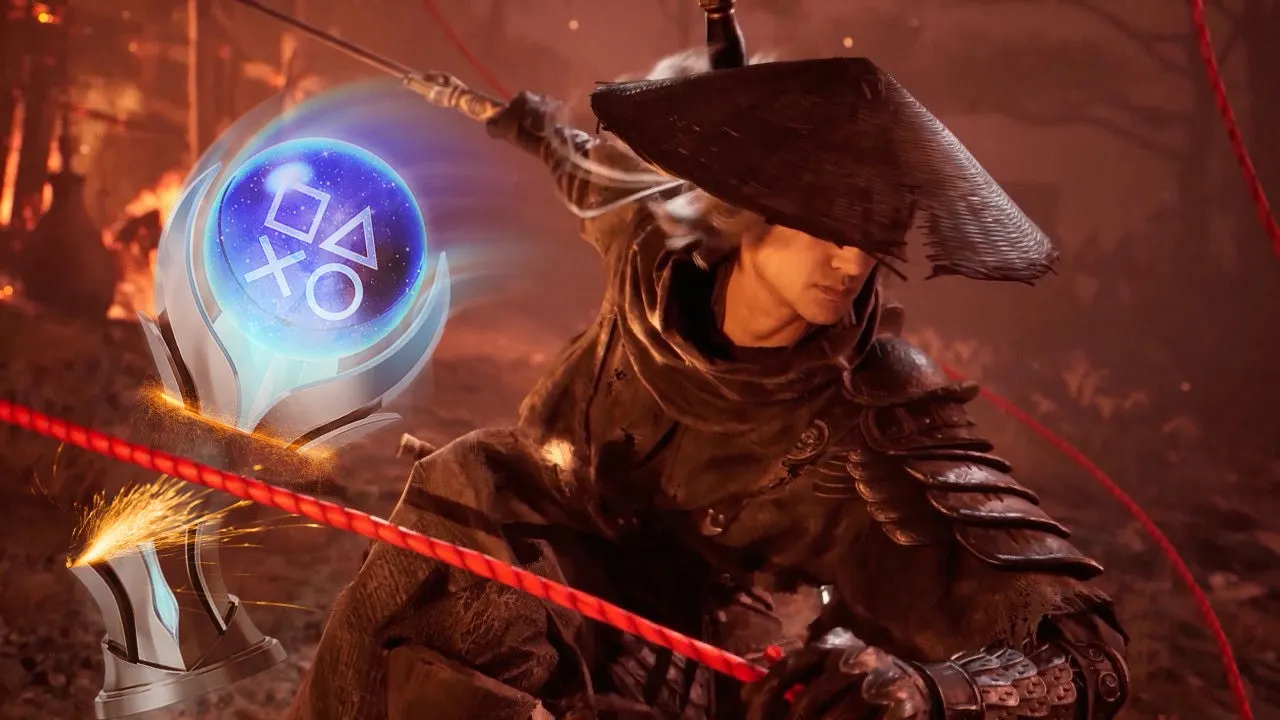
This is an opinion piece from writer Travis Northup. IGN's opinion columns represent the personal viewpoints of the writer, drawing on their own experiences and research to explore the exciting world of video games. During a recent visit to Phantom Blade Zero developer S-GAME ahead of the action RPG’s release, the studio showed off a pretty neat difficulty option that unlocks once you’ve beaten the game, called 66…
This is an opinion piece from writer Travis Northup. IGN's opinion columns represent the personal viewpoints of the writer, drawing on their own experiences and research to explore the exciting world of video games. During a recent visit to Phantom Blade Zero developer S-GAME ahead of the action RPG’s release, the studio showed off a pretty neat difficulty option that unlocks once you’ve beaten the game, called 66 Days Mode. Here, you’re given just 66 chances to complete the entire campaign, turning the protagonist’s heart condition into a smart in-game mechanic for truly dedicated players to take on as the ultimate challenge. Excitedly, another member of the press said, “Ooh, that’ll be a fun achievement to chase,” to which a developer quickly chimed in to say, “No, no. There’s no achievement. All achievements can be acquired on a single playthrough on any difficulty.” This is a strategy I’ve heard quite a few times in 2026. Over the course of my numerous game studio visits this year, I’ve spoken with more and more developers who are intentionally curating their achievements list to be as approachable and inoffensive as possible. Why? Because they’ve learned that there’s a growing population of players who factor them into their purchasing decision – sometimes even opting to skip out on games they would have otherwise enjoyed if collecting all of the digital trophies isn’t a guarantee, or requires them to go out of their way. The result of this threatens a landscape that’s worse for everyone, whether it’s players who have become increasingly invested in the treadmill of chores to complete or developers who have a financial incentive to design components of their game around the desires of the achievement-hunting community (undermining the entire point of achievements to begin with). Achievements have, of course, been around since the Xbox 360 debuted in 2005. Within three years, both PlayStation and Steam had their own equivalents. Yet despite being well aware of their two-decade existence and the obsession that can surround them, I’d never personally talked to anyone from the achievement-hunting caucus until recently. I made a new acquaintance while playing tabletop RPGs, and while making small talk during character creation, I noticed this person had a Steam Deck with them. I asked what games they were excited about playing, and they said, “I’m thinking of getting the new Castlevania game… just waiting to see what the achievements list looks like.” I used the opportunity to probe into their worldview and how they enjoy games. They explained that for them, checking off the list of to-dos in a game was cathartic, and if too much was required of them to complete the list, it stressed them out and made them not want to play at all. For as long as RPGs and quest logs have existed, there’s certainly been an element of the checklist and completionism in the nerd space, as many of us have a compulsion to do and see everything a game offers. That’s now a part of game design more than ever thanks to the growth of live-service: Fortnite wants you to log in daily to tick off a list of jobs that may not even be in the game modes you want to play that day, but you do so just to receive that hit of XP. That influence has bled over into offline single-player games as well, like Ubisoft adding an in-game list of daily and weekly chores to tick off in recent Assassin’s Creed games, asking you to unnecessarily grind repetitive tasks rather than focusing on the more engaging content those games offer. I’ve always considered those dailies as optional extras at best and chaff to be ignored at worst. So I’d be lying if I said it isn’t at least a little bit depressing to hear that, for some, the medium has been reduced to a Trello-like task board that they prepare for in advance and play while heavily referencing a guide to ensure they don’t miss out on any of the trophies along the way. For me, the whole point of gaming as a medium is discovery, experiencing your own personal version of an adventure or story, and, well, playing . It feels like a growing number of players have forgotten the playing part – like those who follow the instructions on a LEGO set step-by-step rather than using those building blocks to create something unique. Not including an achievement for a game’s hardest task completely inverts the entire point of achievements. While I don’t believe this approach of play is anywhere close to becoming mainstream, it’s clearly dominant enough that it’s affecting the design strategy behind achievements and even games at large. Not including an achievement for a game’s hardest task for fear of alienating a particular group, or calibrating an entire achievement list to be easily attained on a single playthrough completely inverts the entire point of achievements, where players were incentivized to hunt for secrets and overcome the most challenging content. Not only that, if this strategy becomes widespread over time, it will have taken something that’s supposed to be fun and turned it into something that exists purely as a marketing tool for the developer. “How painless will it be to get all the achievements?” becomes just another bullet on some PR manager’s press release to persuade those with an acquired addiction to these virtual badges to spend time and money on their game. I certainly have my own opinions of those who place so much stock in achievements that they allow them to determine which games they play, but even those who casually enjoy aiming for the highest accolades and hunting for the most elusive secrets have lost something when achievements for pursuing those challenges no longer exist. But there’s a much more consequential issue at play here: how the habits of achievement hunters are actively affecting game development. It seems that many developers actually designing the games aren’t as thrilled by it. I’ve begun asking designers and directors about their relationship with achievements any chance I get, and the most common sentiments from my limited sample range from mild annoyance to outright antagonism toward them. Sam Barlow, a designer who worked on the Silent Hill series before creating indie darlings like Her Story and Immortality, recently took to social media to express his opinion on the matter, writing a thread of posts that describes the friction quite well: And herein lies the problem: when players start taking achievements seriously, especially if it’s factoring into which games they choose to buy, developers have to start taking them seriously too. And if they want to use achievements to encourage players to chase interesting stuff they’ve hidden in their game or take down its most challenging content, as most developers I’ve talked to seem to want, then they find themselves at odds with the “easy checklist” a segment of players are looking for. Now what was a minor annoyance that non-achievement hunters could mostly ignore has real consequences for all of us – because the fear of losing out on the market of achievement hunters could actively influence actual game design. In Phantom Blade Zero’s case, the impact on design is pretty clear, as S-GAME has stated that the 66 Days Mode has no unique weapons, enemies, or unlockables associated with it – not even a fun cosmetic item for those who beat it to show off. It’s definitely possible that there are completely unrelated reasons for this decision, but my conversations with the team certainly made it seem like not pissing off the achievement hunters was at least part of the reason here. When players start taking achievements seriously, especially if it’s factoring into which games they choose to buy, developers have to start taking them seriously too. There’s an interesting argument to be made where one could view this shift in achievement philosophy as a move toward accessibility and not placing these accolades out of reach for those who don’t have the time, patience, or skill to do the demanding stuff that’s sometimes required. It’s certainly an angle I’ve heard some developers focus on when they describe their approach, including some of the developers at S-GAME in regard to Phantom Blade Zero. And there’s likely a genuine effort by some to simply remove barriers for those who care about achievements – a small price to pay to appease those who do, especially when most developers don’t seem to. But that shift also removes any sense of real achievement for those who do want challenging or interesting objectives beyond those presented within a game. And in any case, if accessibility is a factor, it’s certainly secondary to the thing game makers actually care about: selling their game to as many people as possible. Whether you think it’s a good thing or not, you have no incentive to play Phantom Blade Zero’s 66 Days Mode aside from your own satisfaction, and that’s at least partially influenced by the commoditization of achievements as a selling point rather than a fun list of optional pursuits. And if achievements no longer exist as digital bragging rights for exactly the type of pursuit that 66 Days Mode represents, then what purpose do they serve? Maybe this new era of challenge-free achievements is just the invisible hand of the market doing its thing. Maybe developers, who could use some help avoiding studio closure and layoffs these days, will be able to benefit from those who care about achievements by selling a few extra copies. But whether it’s the clinical way a growing number of players are using achievement lists as glorified Jira tasks, the vanishing number of achievements that are actually worthy of bragging about, or the impact of achievement-hunting culture on the actual development of games, it seems to be making things worse for all of us. And I, for one, think that’s a shame for something that started out so intentionally silly and fun.
Comments
Comments appear after moderation. Persian and English conversations are separate.