
Palantir reports booming U.S. commercial revenue growth, topping government for first time
Palantir's commercial revenue jumped 148% to $984 million, surpassing government revenue of $953 million.
Palantir beat Wall Street's third-quarter estimates after the bell on Monday, with U.S. commercial revenue topping government for the first time as businesses adopt more of the company's artificial intelligence tools.
Here's how the company did compared to LSEG estimates:
- Earnings per share: 44 cents adjusted vs. 41 cents expected
- Revenue: $2.31 billion vs. $2.18 billion expected
Revenue nearly doubled from a year ago and blew past $2 billion for the first time ever, Palantir said. Net income more than doubled to $1.13 billion, or 44 cents per share, from about $476 million, or 18 cents per share.
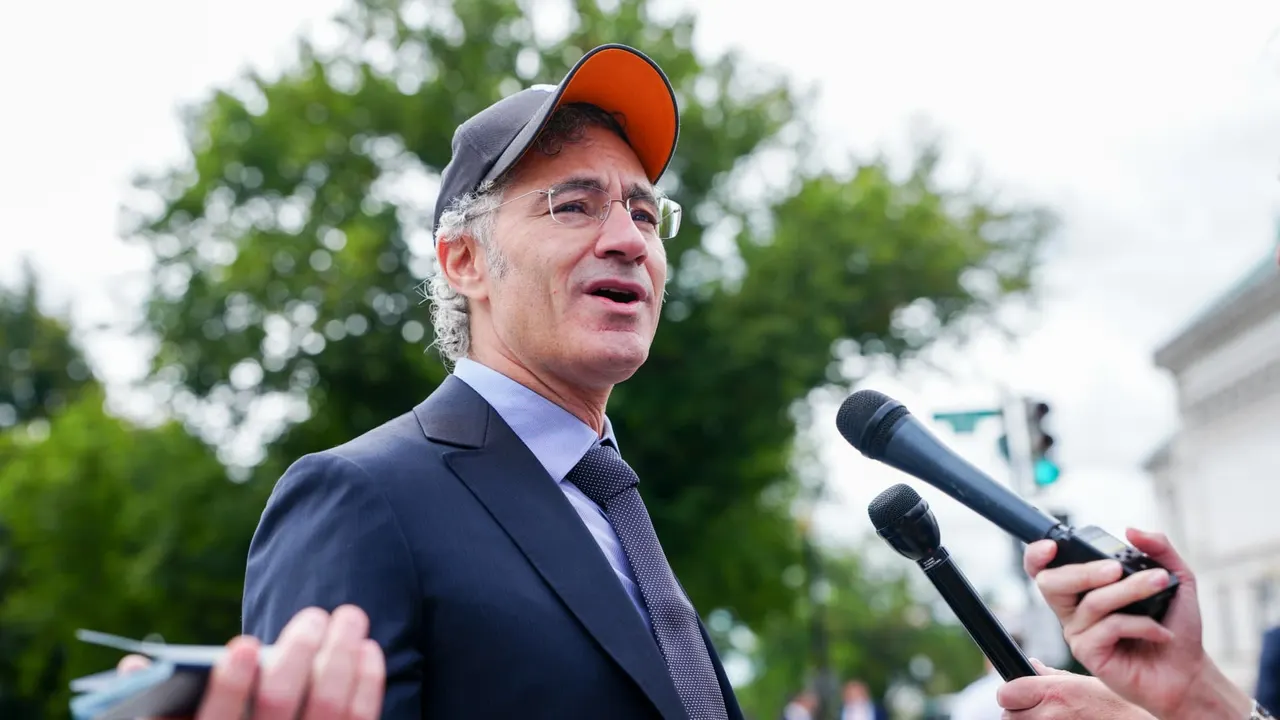
"I don't believe anyone's had consistent results like this in the history of software AI, ever," CEO Alex Karp told CNBC's Seema Mody in an interview, adding that the business is succeeding without salespeople.
Palantir has long been known for its strength in the government sector, but its commercial segment caught up in Q3.
U.S. commercial revenue jumped 148% to $984 million, surpassing U.S. government revenue of $953 million, which was up 96%. The company's U.S. commercial revenue has more than quintupled over the last two years.
Palantir lifted its guidance, saying it now expects U.S. commercial revenue "in excess of" $3.56 billion for the full year. Last quarter, the company boosted its forecast to $3.42 billion. The company projects about $2.65 billion in revenue for the fourth quarter and about $8.53 billion for full-year 2026.
Karp has openly supported the use of open-weight models and criticized leading AI labs, which he told CNBC earlier this year are forcing businesses to sell their data sovereignty. Karp, on Monday, also reiterated recent calls to nationalize AI labs, calling it the "only realistic way" to manage liability.
In September, Karp joined major tech CEOs at the White House as calls for regulation mounted following claims from AI researchers that the technology has a more than 10% of killing humanity.
"My message to everybody is: Beware of thinking you can delay the future in AI," he told CNBC. "The future is here. The political ramifications of it are here."