All news (Page 41)
The latest AI and technology news from the most reliable sources, automatically and in real-time.
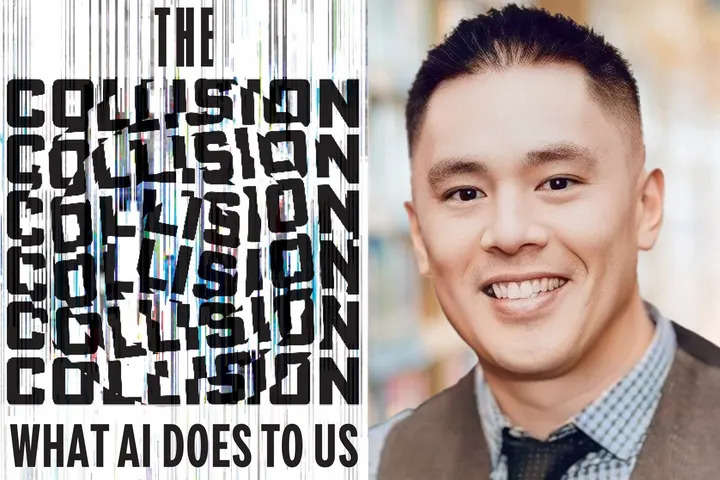
Q&A: The “collision” between AI, your brain, and society
As artificial intelligence use becomes more widespread, scholars are working to understand its effects on the people who use it. MIT Professor Eric So offers one of the most complete syntheses yet, in his new book, “The Collision: What AI Does to Us,” published this month by W.W. Norton. Recognizing that AI offers opportunities to complete work faster, and in some cases has been turned into useful domain-specific…
Welcome Muse Spark Open: open-weight frontier multimodal mixture-of-experts model from Meta
Welcome FLUX.3 Image Klein in Diffusers
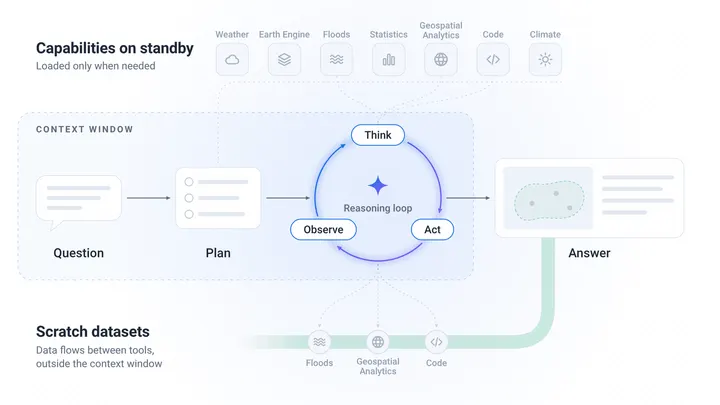
Putting Earth AI to work: Geospatial agents for our planet's biggest challenges
Earth AI

Analyzing technical documents with Deep Review
General Science

Research@ 2026: 10 ways we're amplifying human ingenuity
General Science

Researchers improve weather forecasts looking two to six weeks out
In 2021, Texas suffered the worst energy infrastructure failure in state history, following three severe winter storms in February. At least 246 people were killed as a result of the disruptions, which led to food, water, heat and electricity shortages. If energy officials had had more time to prepare for the storms, for example by bringing in more trucks of natural gas to disrupted areas, damage from the event…

Google DeepMind and Singapore Government collaborate to build fine-tuned AI model for scam detection
Learn how Google DeepMind and GovTech Singapore uses lightweight on-device Gemma models to intercept conversational scams in private chats with zero cloud data egress.
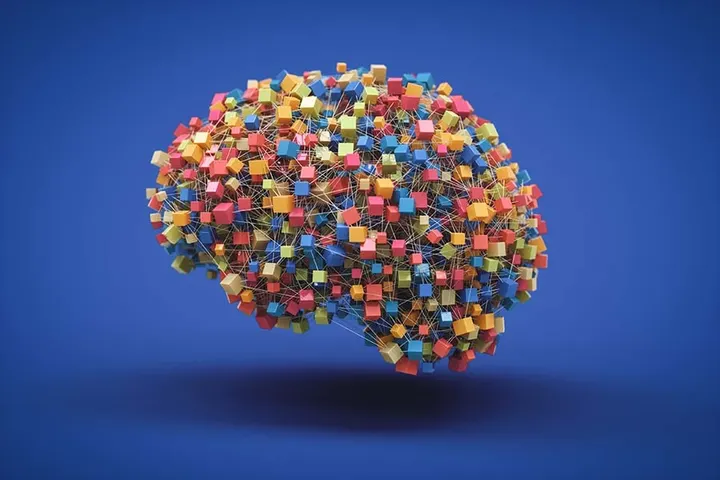
How artificial neural networks build their own learning machinery
As artificial intelligence becomes more and more powerful, its ability to handle human-like tasks is undeniable. Artificial neural networks can learn to recognize images, use language, or write computer code. Like the brain’s circuits, they reorganize themselves as they learn, adjusting the strengths of their connections to improve their performance. The question for many neuroscientists is: What can these machine…
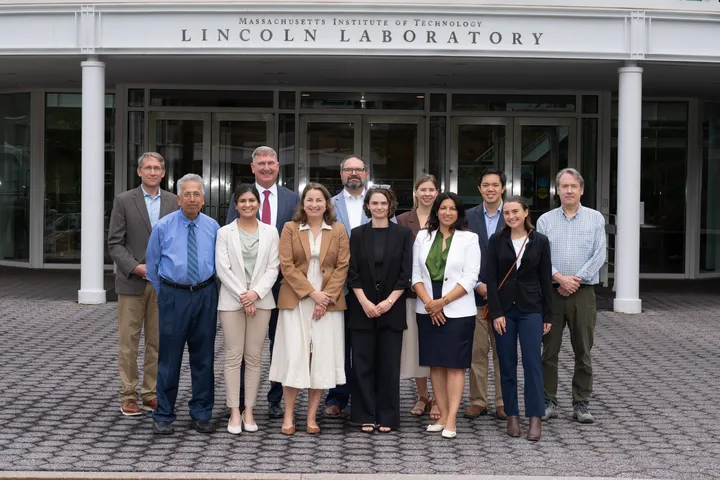
MIT Lincoln Laboratory hosts National Security Commission on Emerging Biotechnology
MIT Lincoln Laboratory hosted the National Security Commission on Emerging Biotechnology (NSCEB) on Sept. 3, for a stop on its national roadshow. The event convened representatives of state organizations, defense centers, universities, technology companies, and business executives to discuss how Massachusetts' biotechnology ecosystem can strengthen national biodefense capabilities. "We have a lot to leverage in this…

Developing Gemini 4 Argon responsibly and safely

Run fast, private agents on-device with LFM2.5-24B-A2B

Gemini 4 Argon for Robotics

Gemini 4 Argon: Built to solve your hardest problems
Q&A: Building accountability behind our words — and AI’s — in civic conversations
When government officials craft policies, there is often a comment period for public feedback. Lawmakers have long had to sort through fake feedback that is mass-produced in an effort to sway policy, but they’ve generally gotten used to detecting it. With, artificial intelligence, however, people can submit realistic-seeming comments, which are harder to dismiss as being fabrications with no person behind them…

3 Questions: What is the best path forward for AI in academia?
With artificial intelligence capabilities continuing to expand, universities now face complex, urgent questions about how to navigate increasing challenges, as well as new opportunities. Much attention is now directed toward this, including an MIT report on AI and education published this summer. A new essay from MIT Statistics and Data Science Center Director Sasha Rakhlin , the Distinguished Professor in Data…

Using AI to mitigate the growing environmental threat of data centers
The global building boom of power-hungry data centers is straining electrical grids, causing greater reliance on energy from polluting fossil fuels. Christina Delimitrou, a newly tenured associate professor at MIT, is fighting this environmental threat by rethinking how the computer servers and networking equipment inside those data centers operate. She and her group apply machine learning to make large-scale data…
The model that didn't exist, so you made it yourself
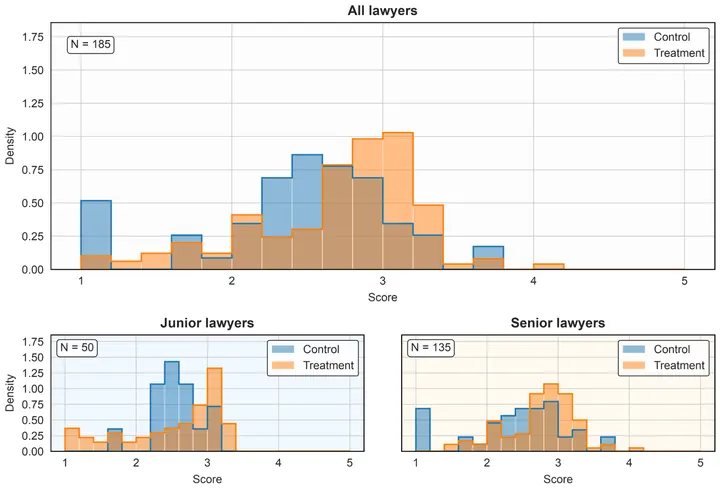
Does better work always mean better workers?

Discovering the value of humanistic inquiry
Artificial intelligence has become part of the zeitgeist. And while it’s a polarizing topic, Linda Rabieh has a unique take on AI: “It’s good for business. Our business, of humanistic thinking.” As senior lecturer in the Concourse program, one of MIT’s first-year learning communities , Rabieh has been introducing students to the “business” since 2010. “What AI has been useful for is making very vivid to students…

Introducing Falcon ASR

Introducing Playground: Create and play custom games
Overview of Playground
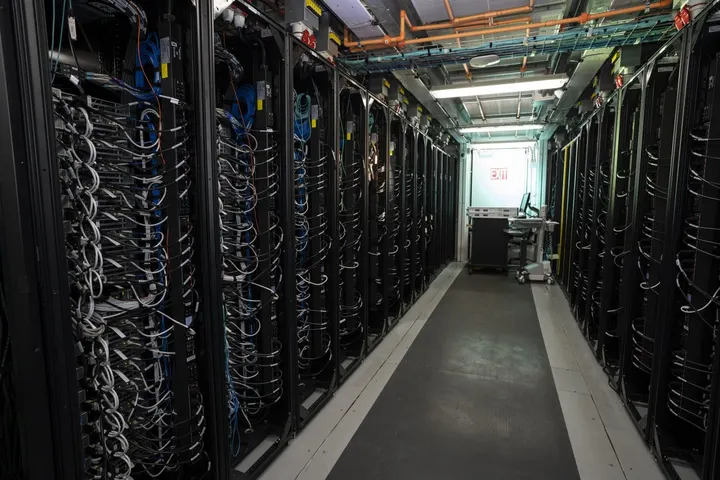
Supercomputing researchers document evolution of AI hardware
As artificial intelligence transforms industries and national security, understanding the latest hardware capabilities is important for maintainind technological advantage. AI accelerators — specialized systems designed to speed up capabilities such as neural networks, deep learning, and machine learning — have been a major area of development for nearly a decade. Since 2018, team from the Lincoln Laboratory…