
Nvidia has a Jensen Huang problem—and no obvious successor
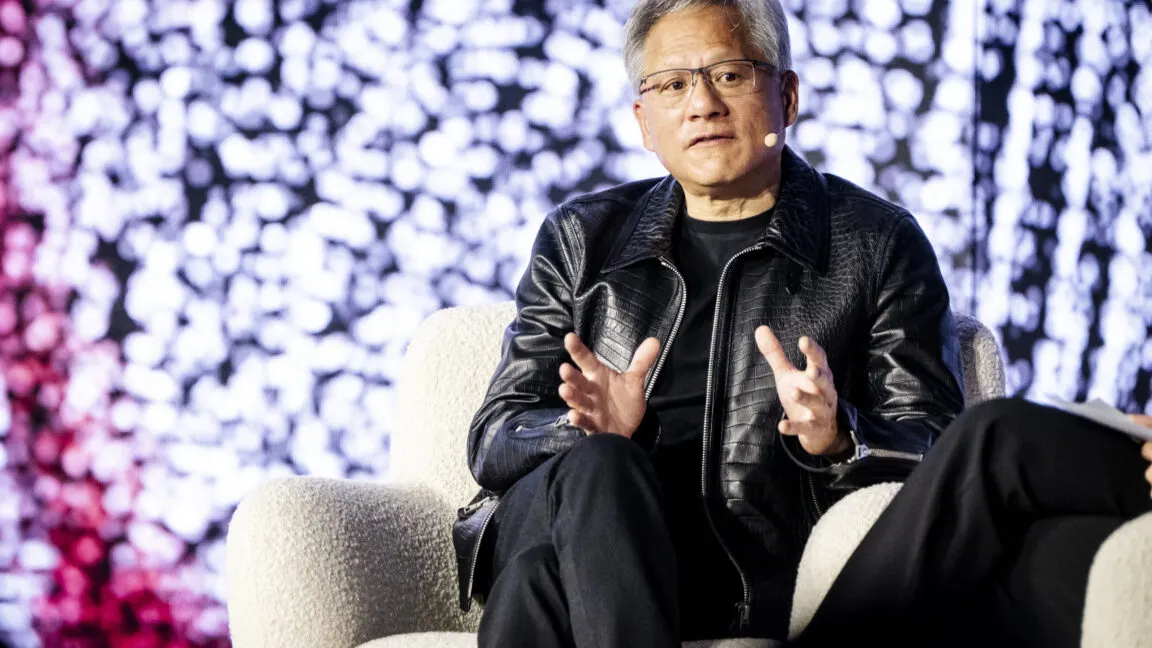
The investigation of Jensen Huang by Nvidia’s board threatens the future of one of Silicon Valley’s longest-serving executives and a key enabler of the AI boom, who has no obvious successor as leader of the world’s second-most-valuable company. Huang is fighting for survival after admitting to an extramarital affair, believed to be with an executive at a large Nvidia customer whom US officials also allege was…
The investigation of Jensen Huang by Nvidia’s board threatens the future of one of Silicon Valley’s longest-serving executives and a key enabler of the AI boom, who has no obvious successor as leader of the world’s second-most-valuable company.
Huang is fighting for survival after admitting to an extramarital affair, believed to be with an executive at a large Nvidia customer whom US officials also allege was working as a Chinese spy.
The prospect that Huang could be forced out as chief executive of the US chipmaker he co-founded more than 30 years ago has alarmed investors and allies in the tech industry. Shares in Nvidia, which late last month ceded its position as the world’s most valuable to Apple amid a broader sell-off in AI stocks, had fallen more than 5 percent by midday trading on Monday.
“Jensen is irreplaceable for America’s AI leadership,” said Shaun Maguire, partner at early Nvidia investor Sequoia Capital, in a social media post.
Nvidia’s chips were instrumental in the creation of generative AI tools such as ChatGPT and now sit at the center of Big Tech’s $1 trillion AI infrastructure frenzy. Huang has personally stood behind investments and guarantees running into hundreds of billions of dollars for dozens of AI start-ups and data center providers, as well as lobbying US President Donald Trump for looser AI regulation.
“Nvidia is not an ordinary company and Jensen is not an ordinary CEO; he IS Nvidia,” analysts at Bernstein said in a note to clients.
With policymakers in Washington pressuring Huang to appear before congressional committees to explain himself, the spotlight is on Nvidia’s board, which said on Sunday it would conduct its own “independent” investigation into the scandal that exploded over the weekend.
The investigation will probably be led by board member and former Cooley chief executive Stephen C. Neal, according to people familiar with the probe.
“If information was compromised, the implications are a lot bigger than if it was just an affair, which obviously isn’t welcome news,” said a fund manager with a large Nvidia position. “Nvidia would survive [Huang leaving] but there’s no better person than Jensen to run the company; it would be very different without him.”
In contrast to other leading Big Tech companies, Nvidia’s annual reports and corporate governance paperwork make no specific reference to “succession planning” and set out no details for how it would replace its CEO, even in an emergency, beyond noting that the company “believe[s] in extensive leadership development.”
Huang’s unusually large number of direct reports, numbered at more than 60 according to a 2024 disclosure, present Nvidia’s board with a “pool of excellent candidates for future promotion,” recent filings say.
Huang leads a small core executive team at Nvidia, including Chief Financial Officer Colette Kress, Operations Chief Debora Shoquist and general counsel Tim Teter. He has become one of Huang’s closest lieutenants since joining in 2017 and has lobbied Washington on export controls.
Jay Puri, a close lieutenant who led Nvidia’s sales operations and deputized for Huang on international visits, stepped down in August and was replaced on the executive team by Microsoft veteran Nick Parker.
Huang, who has cultivated an air of infallibility inside Nvidia, has given no indication he will step down from the role of CEO.
Recent biographies of Huang and Nvidia, including Tae Kim’s The Nvidia Way and Stephen Witt’s The Thinking Machine, portray him as having a rare combination of technical depth and forward-thinking leadership.
He is known to be able to inspire extraordinary productivity inside a company whose 42,000 employees each generated an average of more than $7 million in annual revenue over the past 12 months, far more than any other Big Tech group. But Kim also notes that Huang represents the company’s “single point of failure,” functioning as its head of marketing, sales, and product development.
His influence in the wider tech industry is also unique. Endorsements by Huang of companies in the AI semiconductor supply chain can supercharge their share prices, while his offhand dismissal early last year of the near-term commercial prospects for quantum computing sent stocks in the sector spiraling.
Despite his imperial stature, Huang owns just 3.6 percent of Nvidia. That stake makes him Nvidia’s largest individual shareholder and is worth more than $150 billion. However, Huang lacks the special voting rights held by many Silicon Valley founders, including Meta’s Mark Zuckerberg and Google’s Larry Page and Sergey Brin, that would allow him to control the board or face down outside investors who might attempt to oust him.
Huang’s total compensation last year of $36.3 million, of which the vast majority came in the form of stock awards, included some $4 million for security paid for by Nvidia, which filings say is “due to the exceptionally high public profile and prominence of our CEO.”
These costs included protection at home and during “personal travel,” as well as using private aircraft for all business trips, according to filings. Huang reimburses Nvidia for personal air travel on private aircraft arranged by the company, according to filings.
Nvidia’s board, whose individual members have until now kept a low profile, confirmed they would appoint a special committee composed of sitting board members assisted by outside counsel to examine the allegations surrounding its CEO.
Neal joined Nvidia’s board in 2019 and is chair emeritus and senior counsel at Cooley, after serving as the law firm’s CEO from 2001 to 2008.
Nvidia’s board is unusual among the largest US companies in having no designated chair. A 2025 report by law firm Fenwick found that only one company in S&P 100—which would be Nvidia, according to its own filings—had no chair.
In its proxy filings, Nvidia states that this set-up “ensures that each member has an equal voice in the affairs and management of Nvidia.”
The other nine members of Nvidia’s board—excluding Huang, who is himself a director—include four men who have been with the company since the 1990s, a former Taco Bell executive, a professor of aeronautics, and a former Goldman Sachs executive who joined only this year.
The board’s public statement on Sunday said it had “confidence in Jensen and his leadership team” and that it had “no reason to believe that either national security or Nvidia secrets were compromised.”
Nonetheless, his admission of an affair on Sunday shocked employees and former colleagues who spoke to the FT.
Madison Huang, Jensen’s daughter who serves as a senior director in Nvidia’s product marketing team and has become an increasingly visible presence at the company’s conferences, canceled a planned appearance at a company event in South Korea on Monday.
The law in Delaware, where Nvidia is incorporated, says executives have certain fiduciary duties including a duty of care and loyalty to their company.
Nvidia’s code of conduct requires executives to “conduct themselves with the highest degree of integrity, ethics and honesty. Our credibility and reputation depend upon their good judgment, ethical standards and personal integrity.”
Even if Huang is found to have breached those guidelines, his defenders in Silicon Valley argue that he is too big to fire.
“Yes he should have known better,” Sequoia’s Maguire said. “But let’s also not nuke our AI industry because China ran a successful intel op.”
Comments
Comments appear after moderation. Persian and English conversations are separate.