
Is V in Edgerunners 2? Is There a Cyberpunk 2077 Canon Ending? And What About Season 3? We Asked the Showrunner in a New Interview
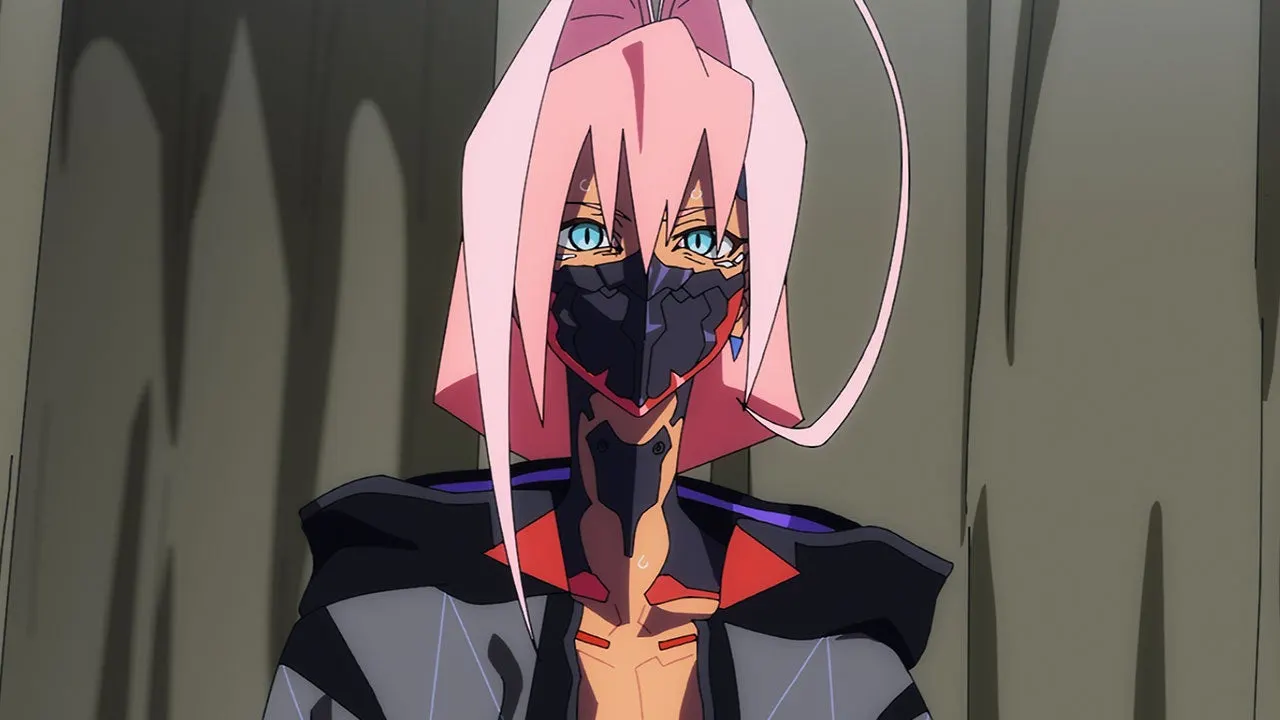
Edgerunners, the hugely popular Netflix anime set in CD Projekt’s Cyberpunk 2077 world, takes what’s great about the video game and expertly translates it into the world of animation. The recently released Season 2 told its own story — one we know is set just a year after the events of the main game , in 2078 (more on this later) — and it all wraps up nicely. But wait! Was that a tease for V in the show? And, if…
Edgerunners, the hugely popular Netflix anime set in CD Projekt’s Cyberpunk 2077 world, takes what’s great about the video game and expertly translates it into the world of animation. The recently released Season 2 told its own story — one we know is set just a year after the events of the main game, in 2078 (more on this later) — and it all wraps up nicely. But wait! Was that a tease for V in the show? And, if that’s true, does that mean there’s an ending of Cyberpunk 2077 that CD Projekt considers canon, and thus acts as the jumping off point for all post-game spinoffs like Edgerunners 2?
At the Lucca Comics and Games festival, we got the chance to put all this to Edgerunners writer, producer, and showrunner Bartosz Sztybor, who did his best to answer without giving much of the game away. And speaking of giving the game away, what about that Season 3?
The world of Cyberpunk is set to expand further, of course, with the in-development Cyberpunk 2 (where and when the game takes place is yet to be announced). There's also a live-action film in the works, although according to CD Projekt, the Cyberpunk 2077 movie won't retrace the game's steps.
IGN: Eagle-eyed fans spotted that in the scene in the data archive, there's a wall of images and there's one that looks like it may be female V. Was that intentional, or something left to interpretation?
Bartosz Sztybor: It's left for interpretation. But also the dialogue that they're having there is, I think, very important. So yeah, it's left for interpretation.
Yeah I ain’t crazy that’s deadass V https://t.co/3XC5KtlrDa
— 𝗠𝗼𝗿𝗶 𝐀s̸s̸ꏳ𝐄 🇯🇲 👽 (@_morijinn) October 20, 2026
IGN: Easter eggs from the game, is that an important thing for you all to include?
Bartosz Sztybor: It's not important at all. That's why I wouldn't call it Easter eggs. I think that's the way we are trying to create a franchise for Cyberpunk. So, to create standalone stories that are self-sufficient, that you can just read one comic book and you are having the catharsis and you don't need to know any other comic book or a game or other stuff. But we are putting those things that are not as a fan service, but for the audience or the readers to feel that this world is alive. That's why we don't want to create anime or animation or a comic book that will need the audience to read three other comic books and two TV shows to understand why this guy is a villain. But I like to put those many things like Sal Bigelow in Edgerunners 2, who was what, five years earlier in the comic book Cyberpunk: Big City Dreams. But only if there’s a reason.
So it's never thinking that, oh, what we should put in this scene to make fans happy? It's about building a bigger narrative.
IGN: When you are setting something after the game, after 2077, do you have conversations with CDPR about a canon ending for the game, that would set up a world state for Edgerunners 2? Or is it more kind of abstract than that?
Bartosz Sztybor: It's both, I would say. It's not like super abstract, but also, we don't want to set a canon ending. So there were a lot of conversations again with the lore team to see what we can do to somehow satisfy all the endings, and what will be the state of the world after the game. That's why the scene that you asked about, we don't want to be straightforward, but we are giving some suggestions that will probably reveal the state of the world in more comic books and other stuff. So there are discussions. There are discussions, but we are not setting one kind of ending.
IGN: When you're writing these stories, do you have a set canon in mind, or is it a little bit more variable than that?
Bartosz Sztybor: There is canon, of course. But again, when we were creating Edgerunners 1 and multiple comic books and board games, the canon was before the game. So we knew the state of the world. And for the things post-game, it's not that there are super detailed canon things, but one important canon information is that Arasaka is weakened and that's it. And it gives us a lot of opportunities to show the city in a different way.
But again, it's not detailed. So it doesn't make any of the endings canon. But the things that happened in the game could lead to that, whatever your choice was.
IGN: Is that something in your mind that you're trying to stay away from things that would be too specific in terms of setting up new canon?
Bartosz Sztybor: Yeah. It's the same thing that I answered about the characters. There are some IP that are created in a way — I won't mention the name — that are created in a way... And I think that the goal of CDPR, the way we want to create franchises for The Witcher and Cyberpunk is to, again, create standalone stories. So you have a graphic novel and you can read it from the start to finish. You don't need to know anything about the world, but you can have the Easter eggs or some connections that build the world, that show you that, okay, this world exists. And I prefer to create a franchise like that.
I like fans who find those things. There’s a comic book called You Have My Word, and there was a fixer [Arthur Cormac] that you saw in Edgerunners 1. And I think only 20 or 30 fans found that. And then that fixer also had a cameo in another comic book. And those three things happen at different times.
So as a fan, you can create their story, you can connect the dots. And I think this is the best way to create a franchise, because you let the fans stay with the story, think about the story, and you don't give them answers. You just give them questions and they can connect things.
So I don't know if I answered the question, but I think that's the way we want to create the franchise.
IGN: What are your thoughts right now on a potential Edgerunners 3? Is it something that you are open to and maybe just waiting for a story? What are your feelings on that right now?
Bartosz Sztybor: When writing Season 1, I was already thinking about other seasons, about other stories because there's a lot of stories to tell. Always when I'm creating, I'm searching for answers to questions that I don't know how to answer. So I knew that after Season 1, I didn't answer all the questions. So there was a dream of creating more seasons.
But I think it's always with CDPR, only if there's a perfect story and perfect people to deliver, then we can do it. And after Season 1, Studio Trigger said, "No, we are just too tired." But then here in Lucca, right after the release of Season 1, we talked with Studio Trigger and they said, "Okay, we are not that tired anymore, so maybe we should do it." And I already had ideas. So two months later I presented a pitch to them, because also they said we don't want to do a sequel, like a classic sequel.
And we have CDPR and we as well, we didn't want to do that as well. We wanted to do something different. So when I presented them a pitch for Season 2, they were super impressed and that's why Season 3 happened. I think that's the same story with Season 3. So I have some stories, but we need to see. If there's no studio or director with a vision like Ikarashi, it doesn't make sense. We don't want to do things that will be mediocre or not good enough. So the ideas are there, but I’m also with how Season 2 completes Season 1. So I think as a package, it already works.