
How much did an iPhone cost in 2007 vs. 2026? The gap is smaller than you think
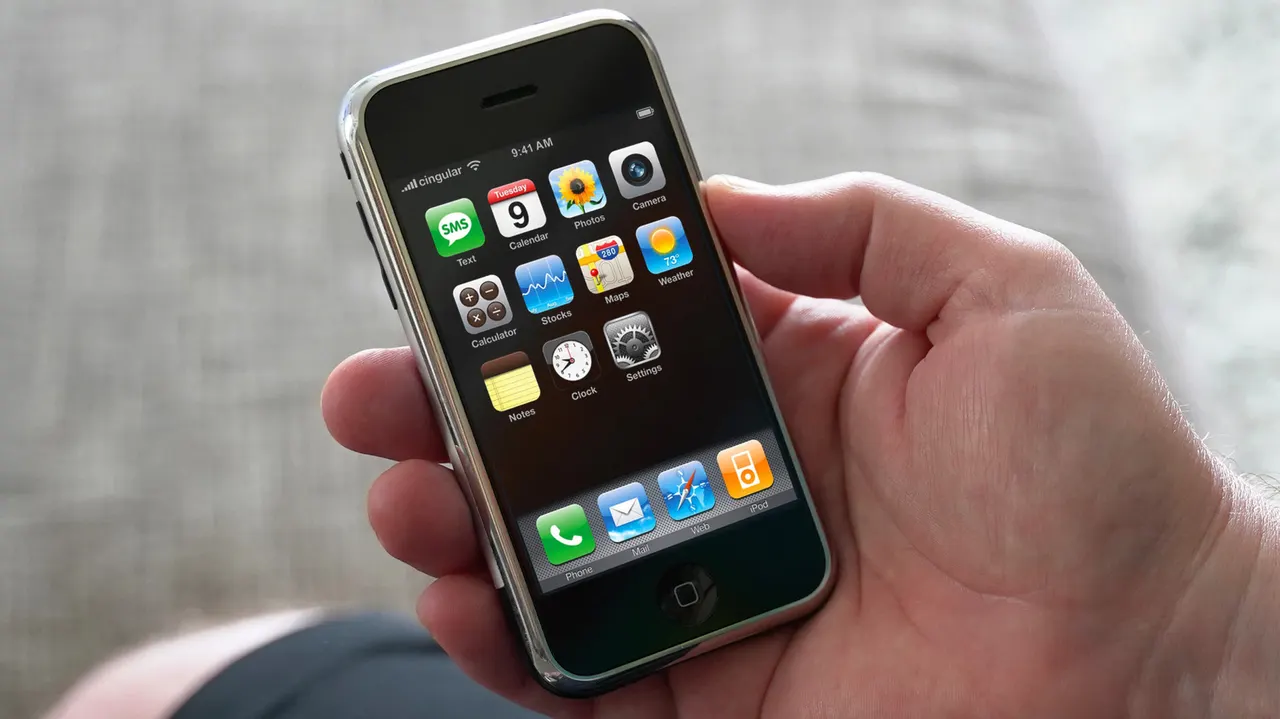
The first iPhone launched at $499 in 2007. See how that price compares to today's models once inflation, storage and features are factored in.
How much did an iPhone cost in 2007 vs. 2026? The gap is smaller than you think
Here's how the first iPhone's price stacks up against Apple's latest once inflation is factored in.
Understandably, it can feel like iPhone prices are out of control these days. The iPhone Duo starts at $1,999 and costs as much as $3,199 if you want to max out its storage. An iPhone Air is $1,100, despite having one rear camera and sporting inferior battery life next to the iPhone 17, never mind the iPhone 18 Pro. You can buy a decent laptop for the same price or less.
If you've been alive long enough, you might be pining for the days when iPhones were hundreds of dollars cheaper. For a brief time, mostly during the 3G era, price was part of their appeal. While they were hardly dirt cheap, it was possible to get a revolutionary do-it-all device without bearing the whole cost upfront or absorbing an absurd amount of debt.
In reality, the difference between old and new iPhones isn't as big as you might think. The leading factor is, of course, inflation, but you're also getting far more capable hardware, and some early carrier deals might be messing with your perception.
Why older iPhones weren't really that much cheaper
Let's start with the inflation issue. The original iPhone started at $499 for a 4GB model. There's no exact 2026 equivalent (the vanilla iPhone 18 has yet to be released), but we can get close enough with 2025's iPhone 17, which is currently $899. Superficially, that's a $400 gap. But if you adjust for inflation of the US dollar, the 2007 iPhone jumps to over $800.
Remember also that the 2007 model required a two-year AT&T contract, so your monthly payments subsidized the phone. Today, you're buying an unlocked device unless you specifically seek out a carrier deal. Those AT&T plans were also expensive. You were paying at least $60 per month in unadjusted dollars for unlimited 2G data. Today, you might pay a similar amount or less for unlimited 5G.
Many subsequent models like the iPhone 3G and 3GS sold for only $199, but again, the trade-off was a two-year carrier contract. Adjusted for inflation, the unlocked iPhone 4 ($599 in 2010) costs around $920 today, slightly more than the $899 iPhone 17. Carriers expected to profit from iPhone owners over the long term, so they were willing to absorb some of the cost to get them in the door.
More power for your money
Newer iPhones include not only better parts but also more of them. The 2007 iPhone didn't have a front-facing camera for selfies or video calls, nor did it have an NFC radio for Apple Pay or features like AirDrop, Find My or GPS. Modern iPhones can fetch location data from satellites and even send emergency messages when no cellular or Wi-Fi is available.
iPhones and other smartphones have become so capable that for some owners, they may be the only portable devices they need. A smartphone can replace cameras, flashlights, radios, navigation systems, gaming handhelds and portable TVs. You can even use one for serious productivity tasks like writing and spreadsheets. Back in 2007, Apple lacked a framework for third-party apps — that had to wait until 2008.
There is an argument to be made that Apple should care more about affordability. In 2026, $899 is still too much for a lot of people, to the extent that putting out a $1,999 model might feel like Apple is playing a cruel joke. Still, Apple has been surprisingly consistent, even holding base iPhones at $799 until memory prices forced its hand.