
How does the digital ink in ereaders work?
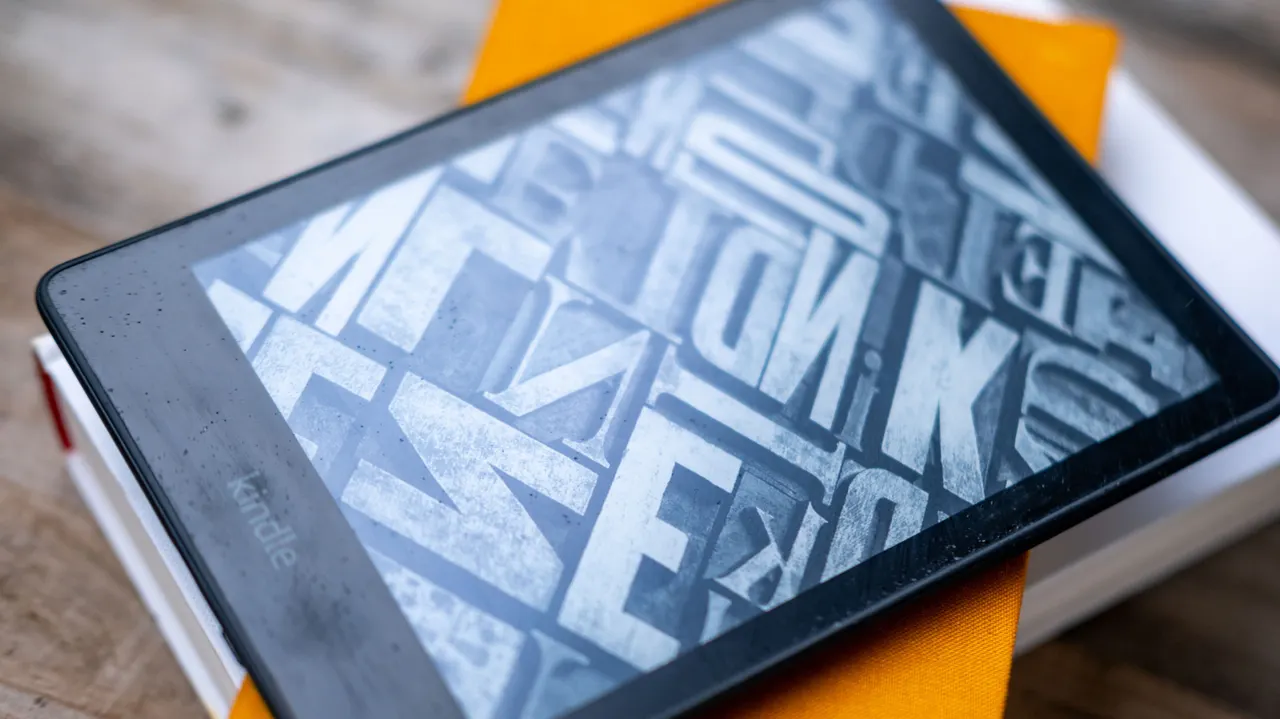
Unlike regular LCD and OLED displays, ereaders rely on e-ink tech that lets them gently sip power and last for months. Here's the science behind how it works.
How does the digital ink in ereaders work?
When electrical fields and microcapsules meet.
No matter how long you've been around tech, some gadgets can still feel magical. Consider the self-balancing systems in PEVs like Segways, Onewheels and electric unicycles. You wouldn't think that a gyroscope could keep a person upright at 40 mph, yet the proof is out there on the streets. The best ereaders may not be as dramatic as that — nevertheless, it's counterintuitive that an e-ink tablet can display an image indefinitely.
E-ink is fundamental to how ereaders work, providing a paper-like reading experience that's softer on the eyes than LCD or OLED. For some, the more significant advantage may be battery life. Many ereaders can sit unplugged for weeks or months at a time, whereas an iPad is liable to drain in several days, regardless of whether you pick it up to browse the web or play a game.
The basic mechanics of e-ink are easy to understand, connected to the basic electromagnetism you may have learned in high school. The devil is in their precise chemistry and electronics. Indeed, there are fundamental barriers to how well they can compete with the rest of the tablet market.
Physics 101 for your ereader
The secret to the e-ink's longevity and easy viewing is that instead of projecting light, it relies on tiny "microcapsules" to represent each pixel. And we do mean tiny. The namesake E Ink company, which partners with the likes of Amazon and reMarkable, notes that even its most basic black-and-white capsules have the diameter of a human hair. Some e-ink panels may rely on a splinter technology called Microcups — but since the same general principles apply, we won't break that out here.
To change what's on the screen, an ereader applies a brief positive or negative electrical current. This forces a particular set of particles to rise to the top or sink to the bottom. The main difference between color and black-and-white screens is that color panels incorporate several different particle types, instead of just two. Whatever the case, it's a combination of particles that determines what your eye registers.
A key point here is that after a charge is applied, particles stay put. No further electricity is required until an image needs to change again, unlike LCD and OLED panels, which constantly consume power when updating the display. It's this discrepancy that gives ereaders their tremendous battery life, particularly when all they're doing is flipping a page every minute or so.
What makes ereaders more comfortable to read is that, like paper, they rely on ambient light for visibility. Though newer models are equipped with lamps, these are still pointed at the e-ink rather than your eyes. In a well-lit environment, you can turn off these lamps completely with no impact on legibility.
The harsh limits of e-ink
If you're wondering why color e-ink isn't present in all your devices, the biggest obstacle is refresh rates. The standard cinematic framerate is 24 frames per second (fps), which by definition requires at least a 24Hz refresh cycle. Many TV shows and YouTube videos run at 30 fps, and the graphics in apps often hit 60 fps or higher. That's no challenge for displays that simply project photons — but having to move material particles around at those speeds is daunting. While we've tested e-ink tablets that can technically run YouTube, video just isn't that smooth on most of them. It's only recently that 60Hz e-ink displays became a possibility.
E-ink also severely limits color gamuts. The E Ink company's best products top out at 4,096 colors, whereas even the cheapest LCD can manage 16.7 million. Panels with HDR support can achieve billions. Simply put, while color e-ink might be fine for comics and graphic novels, it's not nearly good enough for photorealism, let alone simulating the full spectrum of human vision.
Technology is constantly evolving, of course, so we shouldn't rule out the possibility that an e-ink tablet could fully replace your iPad one day. But realistically, the laws of physics are biased, which will probably leave ereaders at least a few steps behind the best LCD- or OLED-based tablets. If the latter ever became dramatically more power efficient, there then wouldn't be many reasons to use e-ink.