
Hollywood Has Flipped on GenAI, Says ‘Avatar’ VFX House Weta FX Chief: ‘If You Don’t Have an AI Strategy, Don’t Bother’
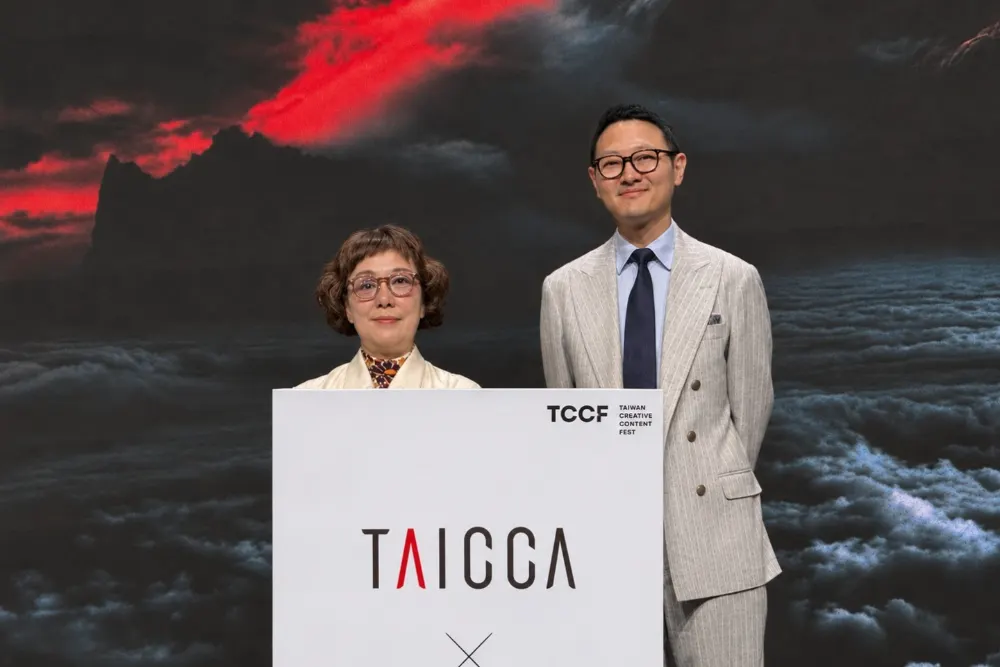
Major Hollywood studios have gone from banning generative AI outright to shunning visual effects vendors that lack an AI plan, according to Daniel Seah, CEO of “The Lord of the Rings” and “Avatar” VFX house Weta FX. Seah spoke to press in Taipei on Friday, after Weta FX signed a partnership with the Taiwan Creative
Major Hollywood studios have gone from banning generative AI outright to shunning visual effects vendors that lack an AI plan, according to Daniel Seah, CEO of “The Lord of the Rings” and “Avatar” VFX house Weta FX.
Seah spoke to press in Taipei on Friday, after Weta FX signed a partnership with the Taiwan Creative Content Agency (TAICCA) at Taiwan Creative Content Fest (TCCF). Weta’s clients, he said, are mainly the Big Four studios and the streaming platforms.
“We also got the memo from each of the studios, especially from their legal departments, saying that there is no such scenario that you can use any of GenAI for any of our work,” Seah said of early last year. By the middle of the year, several clients were allowing it, provided Weta got pre-approval and worked with only a small number of companies. Around the turn of the year, clients began asking about Weta’s AI strategy, mostly to find out how much money the technology could save.
“It’s, ‘If you don’t have an AI strategy, don’t bother to work with us,’” Seah said of the period since the third quarter of this year.
That shift drove Weta to look for a partner that could help it move faster on GenAI. It found one in Taiwanese animation and VFX outfit Moonshine Studio, which it has worked with for around six months. Seah said AI had become a national strategy in Taiwan on the back of the island’s semiconductor industry. Moonshine, without the client restrictions Weta faced, had been moving quickly as a result, he said.
Seah said Weta has no intention of using AI to replace any of its artists or employees. “It’s more like to enhance and increase more workflow for us,” he said.
Weta chief technology officer Kimball Thurston said the company has been building its own AI models for modifying and recreating the world, “not necessarily the like ChatGPT-type of model.” Work with Moonshine is likely to focus on the artist layer – what the AI world calls the harness, “which I think is the worst name they could have chosen,” Thurston said. The goal is a tool that lets people refine their stories across “whole timelines of long-form content rather than just 20-second TikTok videos.”
Thurston also said Weta uses outside video models such as Kling AI and ByteDance’s Seedance where clients permit it. “You kind of have to,” he said. “It’s not every studio allows us to, but they also came onto the scene and killed a bunch of competition, fundamentally.” Security rules mean such models must be hosted outside China, he added. That is achievable, he said, because ByteDance now operates globally.
Under the partnership, TAICCA and Taiwan’s Ministry of Culture will identify young talent and introduce them to Weta FX. Weta may offer them internships at its offices in Wellington, Melbourne and Vancouver. Seah said Weta recently announced it is likely to open a representative office in London too.
“There’s a Taiwan contingent at Weta in Wellington already,” Thurston said. He added that those artists were there before the new deal and are “integral members of the crews.”
Weta has no footprint in Taiwan. Seah called the island the ideal base for exploring Asia. He pointed to flight times of three to four hours to Southeast Asia, Japan and Korea, government backing and a pool of engineers and storytellers. Thurston said Weta has also spoken to people in Thailand and Korea. He also pointed to a build-out of immersive experiences across Asia, possibly via Singapore.
“It’s more, to me, about market enablement than it is about any particular location,” Thurston said.
“I think this is a key opportunity to move from technology hardware to technology applications – that is, software,” TAICCA chair Sue Wang added. She called the deal the biggest Taiwan has struck in the content industry so far.
Thurston said Weta started an open-source project around 18 months ago called the Rongotai Model Train Club, named after an area of Wellington. The project tracks refinement and LoRA training and writes that usage into image metadata. Anyone defining a model has to state which datasets were used. Thurston said the effort dovetails with work at the Visual Effects Society’s Technology Committee and at MovieLabs.
In the past year, Thurston said, Weta won a data center design award for the Southern Hemisphere. The award was for a cooling system that uses no water and is more power-efficient.
“I hate that a lot of companies are building up gas, basically gas turbines to power data centers,” Thurston said. “I think it represents bad engineering, speaking as a computer scientist.”
Weta VFX supervisor Sheldon Stopsack said the new tools have to fit into the studio’s existing pipeline, including its motion-capture work. “We want to be able to kind of shape the world the way the filmmaker envisioned it, we envisioned it, and, you know, have this creative control ultimately at the end of the day with any of these technologies,” Stopsack said.
“People still want to see the big star performing,” Thurston added. “They may be performing as an ape, or they may be performing as a Na’vi, or some other crazy creature that gets created, and that creature may be created using some technique, but people want to go see the actor perform.”