
Everyone Is Running a Con in You Can See Everything
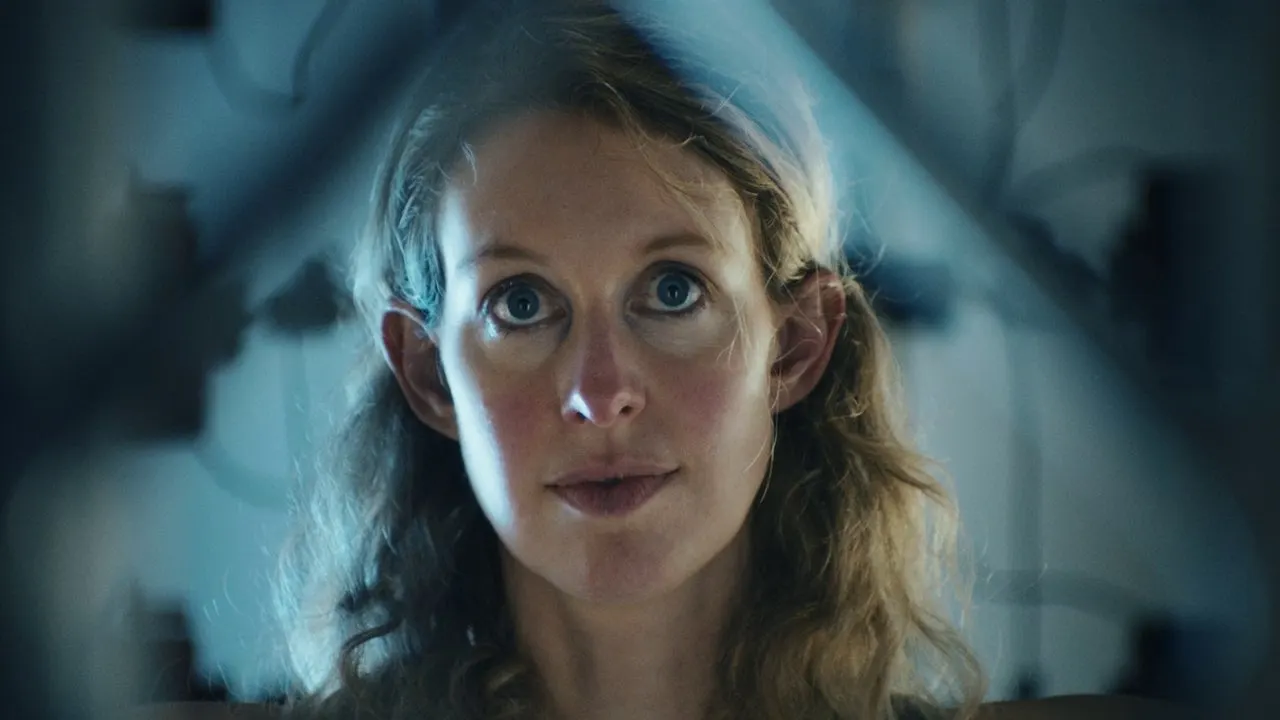
Full spoilers follow for You Can See Everything , which is in theaters now. “The greatest trick the devil ever pulled was convincing the world he didn’t exist.” — The Usual Suspects You Can See Everything is, deservedly, one of the most-talked-about films of the year, and is sailing past box office records for documentaries . The filmmaking itself is impressive, often surprising, and effective. But the movie’s…
Full spoilers follow for You Can See Everything , which is in theaters now. “The greatest trick the devil ever pulled was convincing the world he didn’t exist.” — The Usual Suspects You Can See Everything is, deservedly, one of the most-talked-about films of the year, and is sailing past box office records for documentaries . The filmmaking itself is impressive, often surprising, and effective. But the movie’s staying power is as a social experiment about whether any of us truly know, care about, or communicate what’s “real” outside of our own interests. Truth exists on a spectrum in the world of this film, and it often feels like a game of narcissistic whack-a-mole. Liar, or Wired Differently? We understand that co-directors Nathan Fielder (Nathan for You) and Lance Oppenheim (Primetime) haven’t delivered a definitive take on whether Elizabeth Holmes is a liar; according to the legal system and whistleblowers, she is, after her company Theranos was revealed to be, essentially, hawking a blood-testing machine that didn’t actually work. What the film is asking is whether Holmes understands that she is lying, or if she can discern the difference between what she wishes were so, and what is. It’s like crafting a “not guilty by reason of insanity” defense for fraud. For years, pundits and armchair psychiatrists have speculated that Holmes has Narcissistic Personality Disorder (NPD) and sociopathic or psychopathic tendencies , though she has no public diagnosis. Yet, in You Can See Everything, there are moments where Holmes appears to be neurodivergent in a way that reframes her entire story. That is to say nothing of the fact that her partner, Billy Evans, is (on screen, at least) wildly controlling, and the relationship often feels abusive. In the world of the film, Holmes sometimes appears as a victim and the most sympathetic character. So the questions become: was she manipulated by her original romantic and business partner, Ramesh “Sunny” Balwani, whom Holmes met when she was 18 and he 37 ? Is that pattern now playing out with Evans? Is she a narcissistic sociopath, or is she on the spectrum in such a way that inhibits her from reading social cues and understanding language nuances to a degree that she can lie, and not know that she is? The first real jaw-dropping moment in You Can See Everything is when Fielder shows Holmes and Evans the famous Abbott and Costello sketch “Who’s on First?” She finds it funny, yet insists that she didn’t understand that the first baseman’s name was “Who,” which is the entire crux of the joke. As Fielder presses, she becomes visibly upset by her own confusion, and Evans sends her to bed like a child. Again and again, the film suggests that her discernment is inhibited, and she isn’t using language the way the rest of us do. Evans claims her brain simply works differently. Fielder runs this experiment because a question arose earlier around Holmes’ wording in a clip he plays for her, in which she says the Theranos blood-testing machine “can” run the tests without clarifying that it couldn’t yet . Holmes and Evans bring the machine out of storage to demonstrate what she’d meant: it was possible for the machine itself to work, but the testing had not caught up with its capabilities. The implication is that what was seen as a lie was really Holmes’ failure to understand linguistic nuance. Could it be, we wonder, that this woman did terrible things, but also, that her actual neurological conditions have been misunderstood in such a way that her sentence isn’t commensurate with the reality? Read our You Can See Everything review . Theranos whistleblower Tyler Shultz wants to disabuse us of that speculation. Talking to CBS , he said he almost jumped out of his seat during the sequence featuring the Theranos device because, according to him, that was not the machine they were using on patients, but a future version that was never completed . In his view, the film re-litigates Theranos just enough to sow doubt in the audience’s mind. This brings us to a broader point, one Shultz makes: this isn’t a documentary. What this is, is a very well-made film and a cleverly told story, one that, in ways the filmmakers are most certainly aware of, and perhaps some they are not, holds up a funhouse mirror to truth, and to all of us. Showmen, Not Documentarians The question of who is manipulating whom starts with the film itself. Holmes and Evans pitched a “documentary” to tell their version of the story, and the directors used the same unregulated label to tell theirs. Nobody had to meet a real, standardized legal bar to capture the “truth.” Broadly, when it comes to documentaries and entertainment, the courts seem to rest on an imagined “reasonable viewer” who recognizes dramatization and has enough discernment to tell entertainment from reality. When Olivia de Havilland sued FX over the series Feud , the court didn’t seem to believe that an audience would interpret a docudrama as fact. This defense can hold up even on a news network. When Fox News was sued over Tucker Carlson’s show , Fox’s lawyers argued that no reasonable viewer would believe what he was saying was factually accurate. The judge agreed, writing that given Carlson’s reputation, his viewers arrive “with an appropriate amount of skepticism,” and dismissed the case. The question of who is manipulating whom starts with the film itself. But research suggests that real viewers simply aren’t making these distinctions. A Washington University study found that when a film contradicted an accurate text, students recalled the film’s misinformation as much as half the time. Perhaps more saliently, a general warning that films can be inaccurate didn’t change the outcome; only a specific warning about that particular error had an impact. According to the Telegraph , the share of UK viewers who believe The Crown is an accurate account of history rose from 19% to 27% between 2022 and 2023. Worrisome, perhaps, but understandable; they call it suspension of disbelief for a reason. Basically, we’re not very good at parsing fact from fiction even in the best circumstances. Given that, if accuracy is the goal, then it’s notable that Fielder and Oppenheim were tapped for this project. This isn’t Ken Burns or Errol Morris . These are showmen whose work has, for years, seemed to blur the line between performance and reality. There are layers of irony here. Oppenheim just released Primetime, a film about the ways in which To Catch a Predator host Chris Hansen was willing to use and manipulate subjects to get what he needed to make a great story. Meanwhile, Hansen calls the film a “complete work of fiction” and says it exploited his name and image for commercial gain. And now Oppenheim has co-directed this film, about a known liar, that may be playing with ideas of truth itself. For his part, Fielder has faced questions about whether the way participants were portrayed in both Nathan for You and The Rehearsal skirted ethical lines. To be clear, they are very good at what they do, and this isn’t to say they’re unethical. One lens on the film is the idea that they’re purposefully using their own reputations to ask some very interesting questions. Another is that they framed pieces of Holmes in or out, depending on what was convenient for their narrative. Enter Amanda Seyfried Certainly, there are points where they know they’re doing sleight of hand, and as viewers, we’re left wondering if they’re challenging the audience to catch them. One of the film’s great twists comes just as you think the story is over: Holmes has gone to prison, and you can almost feel yourself in the editing room with Fielder and Oppenheim as they realize that what they have is interesting, but not quite enough to truly break through. You can nearly hear one of them say: “Let’s turn this on its head. We had Liz watch the fictional version of herself; let’s do the reverse with Amanda.” But we don’t know what truly happened. We do know that watching Amanda Seyfried and Elizabeth Holmes watch each other brings a bit of voyeuristic glee. Years ago, I heard a story about a filmmaker who shot a brutal car crash scene based on a deeply traumatic incident a friend had told him about, without her permission. When the film premiered, he invited her to sit with him, without telling her what he’d done, and then, as her story was brought to life on screen, he just… stared at her, waiting to see her reaction. There’s something chilling about that. The sequences of Fielder showing The Dropout to Holmes (the Hulu series where Seyfried played Holmes), and his film to Seyfried, reminded me of that incident. To be clear, I’m not suggesting Fielder is that man. But the impulse feels related. It’s like, “I want to see what it looks like when you are faced with shame, pain, or heartbreak… I want to watch you as that happens inside of you.” And in the case of You Can See Everything: I then want to show the world what that looks like. It’s a voyeuristic impulse many have, and another way the film challenges the audience to confront the spectrum of acceptable versus verboten acts, and what it is to use others and present an image to the world for your own purposes. (Here’s the thing: that story is hearsay. I can’t say with 100% certainty it’s true. But I told it, you believed it, and now that I’ve said it may not be, you don’t know what to believe. Welcome to You Can See Everything.) Upon watching Holmes and Fielder’s time together unfold, Seyfried immediately slips into the fantasy of playing her again. Seyfried is a wonderful actress and, by all accounts, a genuinely good human (she has a farm filled with rescue animals ). She even cares enough about Holmes, without being a fan, to tell Fielder she hated to see the other woman in a toxic relationship with Evans . And yet she, too, has a stake in a particular interpretation of Holmes, winning an Emmy for her portrayal in The Dropout. This is not a condemnation of Seyfried, who wrestles with the idea that her project may have had some responsibility for negative outcomes in Holmes’ life. Yet upon watching Holmes and Fielder’s time together unfold, she immediately slips into the fantasy of playing her again. In a brilliant bit of filmmaking that captures nearly all of the film’s themes at once, Seyfried reenacts a visit between Fielder and Holmes in prison, since he couldn’t film there. In it, Holmes claims that the guards and others treat her terribly because they believe the version of her that The Dropout presents is real. At one point, Fielder second-guesses his own memory of her wording, prompting Seyfried to wonder aloud if he’s being fully accurate or protecting his subject. Neither can be sure that “their” version of what happened is real. Notably, the exchange underscores how readily audiences believe the version of a person a film or series presents, until they’re shown another. Like this one. The Many Faces of Liz For large chunks of You Can See Everything, we are asked to explore the idea that Holmes’ image has been used: by Balwani and Holmes herself, by The Dropout, now by Fielder and Oppenheim, and most grotesquely by Evans. He reportedly wants to make an AI version of her available to the public, letting anyone put words in her mouth. He posts from her social media account, as her, apparently without her knowledge, including genuinely offensive comments that she, not he, will be judged for. Her face, her body, her voice: everyone is cherry-picking and using her image for their own ends. And we’re right there with them: the film spends its first stretch awkwardly making jokes at her expense, and most of the audience is laughing. The documentary has a thread about Evans wanting to benefit financially from the film, and ultimately the couple relinquished their stake. But the movie seems fine with everyone else benefiting from her image: it is making a great deal of money itself, and The Dropout before it earned acclaim and awards. And all of these ideas around “using” her image are set against real violation: two relationships that read as abusive, one with Balwani, whom she testified abused her (he denies it) , and one with Evans, at least as the film presents him. And, crucially, according to her father, there was also a sexual assault that changed her forever. This is a reference made quickly that the film never follows up on. Maybe that assault is what set her on this path of creating characters she felt safe hiding behind. Whether there is any sustaining “Liz” beneath the characters that she or others have crafted is unknowable. But the film seems to be saying: Holmes is many things, and among them, she is an object that has been used by others for years, and here we are, doing it again. To be clear, the intent isn’t to create false equivalencies. Holmes is the deepest narcissistic rabbit hole of them all; it’s just that, to lesser or greater degrees, everyone is using the same kind of selective truth and storytelling to get what they want. There’s a moment in the film when a man involved in Holmes and Evans’ new venture (what some have dubbed Theranos 2.0 ) says, in essence, that all CEOs lie. The comment raises an interesting question: how different is Holmes, in terms of apparent sociopathic tendencies, from the lion’s share of tech CEOs? Elon Musk settled with the SEC over a “funding secured” tweet that a judge ruled was untrue and reckless , yet he was never criminally charged. Nikola founder Trevor Milton was convicted of lying to investors, then pardoned . Perhaps this is another question the film raises: when does a lie matter, and when doesn’t it? In Holmes’ case, there is one distinction: Theranos deployed its machines, and real people got inaccurate medical results. The company voided two years of results from its Edison devices, and misdiagnosis caused patients real distress. Yet the film spends almost no time contextualizing what actually happened with Theranos, so Holmes’ victims are entirely unseen and unaccounted for. Perhaps that’s because Holmes was acquitted on the patient-fraud charges and convicted only of defrauding investors. Or perhaps because that piece of the story was inconvenient to the narrative. But the danger is that the film presents a far more sympathetic version of “Liz” than, say, The Dropout, and that neither version is fully true. The Ultimate Magic Trick At one point, Fielder talks about illusionist David Blaine, describing a trick in which the magician appears to shove an ice pick through his hand. But the reality is, Fielder says, it’s not an illusion; he is literally driving an ice pick through his hand. And the analogy that the whistleblower, Shultz, sees in this moment is that Holmes really is in an abusive relationship, and so you have empathy for her. But she’s doing the real thing, enduring actual pain, for the sake of the magic trick. From his point of view, she is a victim, but she is so by design. Shultz maintains that the woman he saw in that film is unrecognizable from the Elizabeth Holmes that he knew, who commanded any room. Perhaps Holmes really is an immaterial non-entity, a chameleon, twisting herself to the needs of the moment. So, what is the “truth”? In reality, Oppenheim and Fielder likely know both that Holmes is a liar and that she knows she is one. But simply owning that isn’t much of a movie. Evans, for his part, knew he wasn’t inviting traditional documentarians into his world. Did he and Holmes think they could play players? Did it work? Or is the film playing us ? Maybe it’s all of the above. You Can See Everything is manipulative, and it captures something essentially human. Those two things aren’t necessarily in conflict. This is a film about how we use each other, how we are used, the images we present to the world, and how, perhaps, no one ever really knows anyone, often including ourselves. “You can see everything” is a promise Holmes makes to Fielder early in the documentary. But it also points to the filmmakers’ understanding of what they are doing here. At the end of the day, we don’t see, or know, anything definitively. We are left unmoored, possibly gaslit, as clinical psychologist Dr. Ramani Durvasula points out, feeling like victims of narcissistic abuse so often do. And that’s the ultimate magic trick of the movie: putting the viewer in the position of being had by Holmes, and, perhaps, by the filmmakers themselves. In a sense, it weaponizes empathy. It’s as if it’s saying, if you don’t feel a little taken in, you may be on the more sociopathic end of the spectrum the film presents (least: Seyfried; most, as the film portrays them, a tie between Evans and Holmes). And if you do feel taken in, you are likely a sucker, ripe for the taking.