
Data centers are now a midterm issue, even in Brooklyn
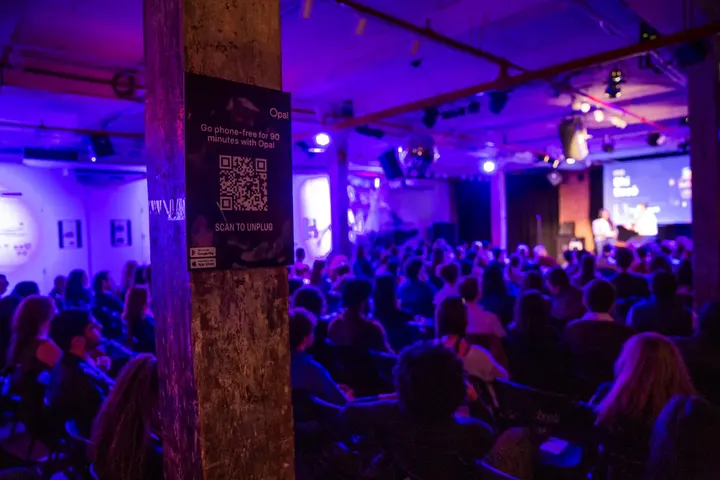
At a Brooklyn midterm party five days before Election Day, every conversation, from a council member’s fireside chat to a debate about the Democratic Party, kept circling back to AI and data centers.
On Thursday evening, I slipped on my neon yellow heels and a floral mini dress. It’s New York, so I can wear whatever I want to a midterm election event full of media types, techies, policy advocates, and, well, does anyone else even exist at these things? I walked into the dimly blue-lit Brooklyn warehouse and was surprised to see the room already filling up.
Newsreel, the media company founded by former Forbes and Newsweek reporter Jack Brewster, hosted the event, and the lineup was heavy-hitting. Kenneth Schlenker, co-founder of the focus app Opal, sat down for a fireside chat about “the state of attention,” and Aryan Banjan, who built the campaign management software Barza, gave a midterm forecast. I, meanwhile, was moderating a panel on data centers.
Brewster said the goal was for people to “put their phones away and talk to each other about the election, five days out.”
As the evening progressed, however, one topic consumed nearly every conversation: AI, data centers, and the backlash against the growing technocracy.
Lately, as a tech reporter, I’ve noticed a growing chasm between tech and everyone else. I spend most of my days talking to people who see the benefits of AI, who are so ambitious in building it and so optimistic that it will succeed that, when I talk to people beyond the tech world, I forget how ugly it all seems to them. Outside the tech bubble, data centers and AI have become such an intense ballot-box issue that they could sway some midterm races on November 3.
A recent report from Data Center Watch found that almost $200 billion in data center projects were delayed, stalled, or blocked in the first half of 2026 due to political and community opposition. Meanwhile, states like Pennsylvania, Georgia, Texas, New York, and Virginia are considering more guardrails and transparency around data centers’ rapid development. Hundreds of new data centers are planned in Virginia alone, a state already nicknamed the “data center capital of the world.”
A fireside chat with New York City Council member Chi Ossé, just before my panel, set the tone. AI came up near the end; Ossé said he doesn’t really use it. To me, though, he didn’t seem to be for or against it. He mostly emphasized that he would like to see tech executives held more accountable and trillionaires like Elon Musk taxed more. He described himself as a democratic socialist, but a “law and order” one. When CEOs talk about a technology that could deplete 10% of human civilization, he said, “they should be called to testify in front of Congress.”
My panel was up next. I moderated a discussion with Maia Woluchem, a technology and human rights researcher, and Hilary Flint, an environmental and public health advocate, about data centers. As I took the stage, I decided to get a better read on the crowd. I asked, “Who here is pro-AI data center?” and was promptly booed. Our conversation covered a range of topics and emotions. People are upset that big tech companies appear to be cutting secret deals with local officials to build billion-dollar data centers. In some cases, zoning rules make it unclear what is being built until it’s too late to protest.
At the same time, people are struggling with the cost of living and doing everything they can to hold onto what’s left of the American Dream, while tech leaders talk about AI replacing workers, or even humanity itself. Residents feel they have lost control over what happens in their communities, and they worry about the environmental and health risks. The panel agreed that data centers are the physical embodiment of people’s fears and anger toward the tech class and the rapid pace of technology.
“What is a life worth?” Flint said when I brought up the benefits that some communities have seen from data center build-outs. People still protest, she said, because they “value their lives a little bit more than a temporary check.”
The panel after mine featured NewsNation host Batya Ungar-Sargon; political strategist Morris Katz, who worked on Zohran Mamdani’s campaign; and Vox’s Astead Herndon. They were supposed to be talking about the future of the Democratic Party. But once again, the conversation shifted to data centers. Ungar-Sargon noted that some labor unions support data centers because of the jobs they promise. (Reports show that data centers create many jobs initially, but those jobs are not permanent once construction ends.)
“There used to be a lot of pride in a community in the Rust Belt about very ugly, enormous buildings in their communities because everybody worked there,” she said, nodding to an earlier comment I’d made about data centers being ugly. “And they knew that building represented prosperity for themselves, stability for their children, and a future and a piece of the American dream.”
Herndon noted that Vivek Ramaswamy was booed for making a similar point in Ohio, a Rust Belt state. “I just want to reinforce the lack of consent happening,” he said. “Because that’s true among Republicans in those places and I’ve watched it.” Katz was also skeptical. “It’s the same people who have taken so many union jobs away,” he said. “The same institutional powers that have robbed labor and working people of jobs and profit. Now coming back to essentially finish the job and take whatever scraps remain.”
Along the warehouse walls, I noticed sticky notes answering posted questions, including “Will we ever be able to get Big Money out of politics?” “God, I hope so,” one note said.
People rushed the bar when the panel ended, and techno music began to blast. They broke into small groups, where AI and data centers were once again the topic, this time in more private conversations. I asked Brewster if he was surprised by how much of the conversation focused on AI and data centers.
“It came up in every conversation on stage, and it was the second most common topic in the questions people sent us when they RSVP’d,” he said, adding that it was happening even in New York, where data centers aren’t very visible. “AI has become an election issue for regular voters,” he said. “In rural communities, the backlash is about feeling replaced. In a place like Brooklyn, it’s more about who gets rich from it.”
Before leaving, I made the rounds, asking people to name the craziest thing they’d seen in tech this year. Two tech founders mentioned the AI assistant startup Instinct, while a non-tech person named Sam Altman
Another non-tech person brought up the rise of deepfakes and AI art. AI art, she said, is starting to signal cheapness. That may be why luxury brands are going the other way: Prada’s holiday campaign features hand-drawn illustrations, and Hermès has been spotlighting artists’ handmade work on Instagram.
On my way out, I spoke to a software engineer who said the craziest thing she’d seen this year was a person who painted their nails orange for Halloween and was asked if it was a tribute to the Anthropic IPO. I admitted that I, too, had once worn a burnt orange dress and briefly thought of myself as the Claude logo.
She later told me data centers are popping up in her Southern California hometown, too. Hearing that, I thought for the first time about how I’d feel if one popped up in mine. She grew up in a Chinese immigrant community, where neighbors are putting signs in their yards showing dragons choking a data center.
The signs have since been translated into other languages, she said.