
Apps for Caregivers Get a Dose of AI, but That Might Not Be Enough
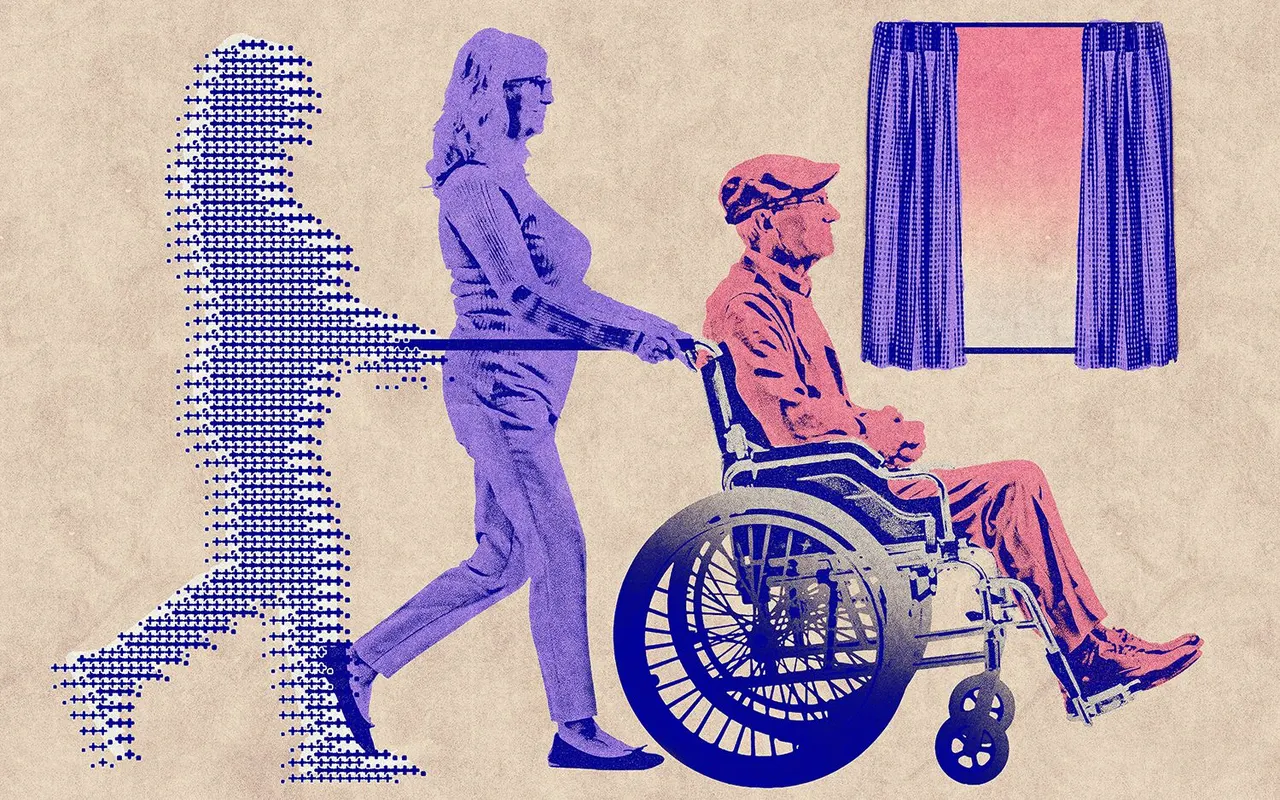
The apps and platforms that help family caregivers manage their loved ones’ needs are becoming more capable, but the broader issue of caregivers’ well-being remains unsolved.
My husband and I are caregivers for our middle son, who has multiple disabilities and requires full-time support. We do our best to keep one another up to date on the activities that fill his daily life while also managing his numerous medical specialists, procedures, and therapies. We have to stay in constant communication while also working our jobs, caring for three teenagers, and managing a household. It’s tough.
We’re not alone in our struggles. According to AARP, in 2025, an estimated 63 million Americans cared for adults or children with a medical condition or disability. On average, these caregivers spend up to 27 hours per week providing care.
This caregiver crisis, where so many Americans provide ongoing, complex care and, as a result, endure poor health, financial strain, and isolation, is worsening as caregivers need more support and better systems.
Helpfully, to lighten the mental load, caregiver apps are aimed at families who are supporting seniors, children, or anyone with a diagnosis that needs regular management.
Apps for Different Types of Caregivers
Every caregiver’s situation is different, and the apps and programs in this space reflect a diversity of needs.
Medisafe, which was created in 2013, tracks medications and sends reminders so users don’t miss a dose. The program can also notify a caregiver if a dose is missed. It gives its users the ability to track medical appointments, track their symptoms, and maintain a list of health care contacts and measurements. It also has a drug interaction checker where users can enter multiple medications to see if they are safe to take at the same time.
Caring Village, which was founded in 2015, has an appointment calendar, a to-do list, and a wellness journal where users can keep track of their loved one’s symptoms and moods, and even upload a photo. Caregivers can assign tasks through the app, create a care plan, and receive reminders to take medication. The app also comes with an AI assistant called Julia that can answer caregiving questions.
In 2022, Bret Koncak, based on his experiences with his two sons who have complex needs, cocreated Mejo, a web-based caregiver app. Users enter an individual’s medical history, which is then consolidated into a one-page summary that can be shared with caregivers, doctors, and therapists.
“A lot of people think that caregiving begins and ends with interactions with the health care system, but a lot of it is about what happens between care visits,” says Koncak. “That's what we're focused on.” For $6 a month or $60 a year, the premium version of Mejo gives users access to daily journaling, which they can share with other caregivers, so everyone stays on the same page without having to catch up verbally.
For now, information in Mejo is entered manually, but Koncak says his team is looking into ways to incorporate AI to help users come up with appropriate questions to ask during medical appointments.
Brett Rowell, whose son Briggs has cerebral palsy, is creating an app called Briggzy, so he and his wife, who work different hours, can more easily hand off their son’s care. Briggzy is currently in the testing phase, and Rowell hopes to launch it to a wider community in 2027.
“My wife took [our son] to most of the appointments because I worked 8 to 5 and she was off during that time,” said Rowell. “So the questionnaires alone, I don't know how to answer half of them unless I have Briggzy. My goal was to bring her mind into a shared space for me, so that way I can be helpful.”
Nasha Fitter, who has a daughter with a rare disease, launched Citizen Health in 2024 with cofounder Farid Vij to collect medical records for patients and store them in a secure portal. “With the users’ consent, we can extract information from those medical records, deidentify it, harmonize it, and start to pull an understanding of diseases through that,” says Fitter. “And then we feed that understanding back to patients so they would get a better sense of the trajectory of their child’s disease.” Citizen Health works with patient advocacy groups to support their research on drug development.
Six months ago, the company launched Ari, an AI “health teammate” that lets caregivers and patients track their loved one's care and symptoms by texting with it. Ari, currently in beta, can also access medical records, patient portals, and Google Calendar events, including specific appointment dates and surgeries. Ari notices caregiver patterns, such as whether they take medication at different times of the day and how that might impact symptoms. It prepares patients and caregivers for appointments by summarizing past medical information and providing appropriate questions to ask medical professionals. And it can help navigate insurance and government benefits.
Right now, Ari is only available for people with rare diseases, but the goal is to make it available and useful to all caregivers and patients.
Trying to Lighten the Load
I. Glenn Cohen, a bioethics and health law researcher and professor at Harvard Law School, is optimistic about AI in the health space overall. “For example, I think it will empower many patients to prep for questions they might want to ask their doctor before going in to see them.”
But he says that users should go into the process with their eyes open to understand the risks and what you're getting out of it, especially if a product is free or cheap.
Most of these devices are not medical devices, says Cohen. “As such, the FDA has not reviewed them, so their safety and efficacy remain a question mark, or it's the company's word for it that you have to take.”
The health information patients and caregivers plug into these AI tools is not protected by federal HIPAA statutes because the information is typically not coming from a covered entity. Instead, it comes from a person or from data collection at home. “If your privacy is important and you care about how the information is used, in some cases, all you can rely on is the contractual promises,” Cohen says. “They typically have language that absolves [the companies] from responsibility in many instances.”
He also warns that the information collected may not be only for the person receiving care, but may also include information about parents or other caregivers.
While I love the idea of keeping my son’s information all in one place so I can keep track of patterns, update his doctors without feeling emotionally drained, and easily hand off his caregiving needs to my husband, making sure we update the app regularly will be the key to actually seeing those benefits.
Denise M. Brown, CEO and founder of the Caregiving Years Training Academy, has seen many apps come and go because she says they can be tedious to maintain, especially when caregivers are already overloaded.
“We have to upload data to the app (care plans, schedules, tasks), and that’s a lot of work,” Brown says. “A physician, visiting nurse, therapist, or hospital discharge planner won’t log into the app to provide updates, which ends up falling back on the caregiver.”
At the end of the day, the need for caregiver apps is great, and many developers in this community, many of whom are caregivers themselves, are trying to do something to lessen the load.
“The technology and apps can open the door for broader seamless integration of care—and hopefully less stress on you as the caregiver,” says Nicole Howell, director of direct care workforce development at the National Council on Aging. But she says the final solution [to the overall caregiver crisis] will be something that not one family, not one caregiver can solve.
“It has to be all hands at the wheel. It has to be government. It has to be private. It has to be family members speaking up, saying the hard truth so we get the best of American ingenuity to move this to where we need to be.”