
24 Years Later, the Funniest Lord of the Rings Movie Quote Is Still a Legendary Fantasy Line
Somewhere in Middle-earth, is there a Chili’s that serves orcs? Does an Uruk-hai host greet hungry customers, tell them it’ll be a 20-minute wait, and hand them a menu? Does the kitchen run out of manflesh halfway through the dinner rush? Is halfling served as an appetizer? What precisely is in the Triple Dipper? These are unreasonable questions to ask of an otherwise perfect fantasy epic. Unfortunately, The Lord of…
Somewhere in Middle-earth, is there a Chili’s that serves orcs? Does an Uruk-hai host greet hungry customers, tell them it’ll be a 20-minute wait, and hand them a menu? Does the kitchen run out of manflesh halfway through the dinner rush? Is halfling served as an appetizer? What precisely is in the Triple Dipper? These are unreasonable questions to ask of an otherwise perfect fantasy epic. Unfortunately, The Lord of the Rings: The Two Towers invites every one of them with one line that feels deeply anachronistic.
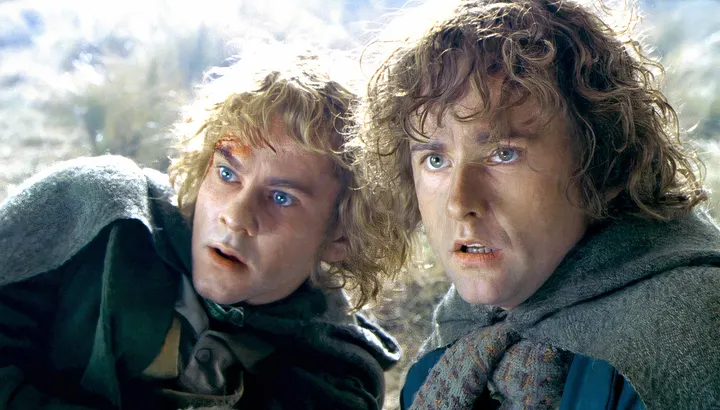
Merry and Pippin are captured by orcs at the end of the first movie, and heading into the second, their orc captors march day and night to bring them to Saruman at Isengard. But the orcs are tired — and hungry. An orc from Mordor called Snaga wants to eat the hobbits, but the Uruk-hai captain Uglúk forbids it. Saruman wants them alive because they might possess an “elvish weapon,” he explains. It’s for the war! Another orc, Grishnákh, proposes that they just eat their legs. They don’t need ‘em. As tensions rise, Snaga creeps up behind Merry and Pippin hoping for just a taste of halfling flesh. That’s when Uglúk decapitates him with one swing of his sword and delivers this unforgettable line.
“Looks like meat’s back on the menu, boys!”
The orcs cheer and descend on their former companion like somebody just dropped a basket of mozzarella sticks on the table. Merry and Pippin seize the opportunity to crawl away. It’s disgusting, efficient, and very funny. Uglúk has resolved a personnel dispute by getting everyone free pizza.
In a universe with a wizard who comes back from the dead and talking trees with very strong opinions about axes, somehow, the single detail from Peter Jackson’s trilogy that raises the most questions is when an orc expresses familiarity with restaurant terminology. And here I had always assumed orcs don’t even know how to read.
The word “back” does considerable work here. Uglúk sounds almost like he’s announcing the return of a beloved seasonal special. Meat was available, then it wasn't, and now, thanks to an abrupt change in staffing, it is available yet again. Tacking “boys” on at the end of the line makes it seem like Uglúk is trying to force some familiarity with his underlings, like the cool boss who says things like, “We’re all one big, happy family here!” Nathaniel Lees delivers the news with such enthusiasm that you almost forget how nasty it is that everyone is about to eat a filthy, slimy orc’s dead body.
Lees, who is easier to recognize as Captain Mifune in the Matrix sequels, gives this minor villain the personality and energy of a manager who just let his entire staff leave work early on the Friday before a long weekend. There’s also something strangely relatable here. Saruman has made his expectations clear. Do not kill the halflings. Bring them in alive. Nobody is listening. Uglúk is frustrated. His solution is a bit extreme, but it’s easy to understand the logic of it.
The vast majority of orcs we see throughout the trilogy are little more than evil troops in Sauron’s army. Most wordlessly march into battle before getting felled by one of Legolas’ arrows. In the movies, the Uruk-hai are literally born out of the mud beneath Isengard. In the books, they’re the result of deliberate crossbreeding between orcs and men. Reportedly, not even Tolkien was really sure. In both cases, we’re led to believe that they are absolutely evil, subhuman creatures with no culture outside of nasty schemes and petty squabbles. Yet Jackson makes the deliberate choice, very early in the second movie, to humanize orcs and inject a bit of humor into an otherwise mostly serious high fantasy epic.
Fans have talked about the “menu” line for years, so obviously people have gotten the actors to weigh in. In a 2021 Thrillist oral history, Lees offered a practical defense: “‘Menu’ is merely the choice of food available.” Stephen Ure, who plays Grishnákh, found the wording less convincing. Jed Brophy, who plays Snaga, allowed for the possibility that the term could exist in their vocabulary — even if that does feel like a stretch.
Elijah Wood, who played Frodo, took the broader view when asked about it at Liverpool Comic Con in 2024. “It’s a good bit of writing, and it gets attention,” he said. As always, the ringbearer is correct. Almost 24 years later, we’re still talking about the dining habits of a character whose biggest contribution to the plot is preventing two hobbits from becoming dinner. The riders of Rohan wipe out the entire host of orcs a few minutes later in The Two Towers while Merry and Pippin make their escape. By the time Aragorn, Legolas, and Gimli catch up (in the scene where Viggo Mortensen famously broke two of his toes kicking a random helmet), the hobbits are already hanging out with a talking tree. The trio of good guy warriors assumes they’re dead.
You could make the argument that “menu” just refers to the food available rather than a booklet orcs occasionally flip through when deciding what kind of meat to eat. But even that feels like a reach. I prefer to imagine a rowdy group of filthy orcs enjoying happy hour at Chili’s, throwing a fit because the kitchen is out of baby back ribs.